
Final Thoughts: Start Composting at Home
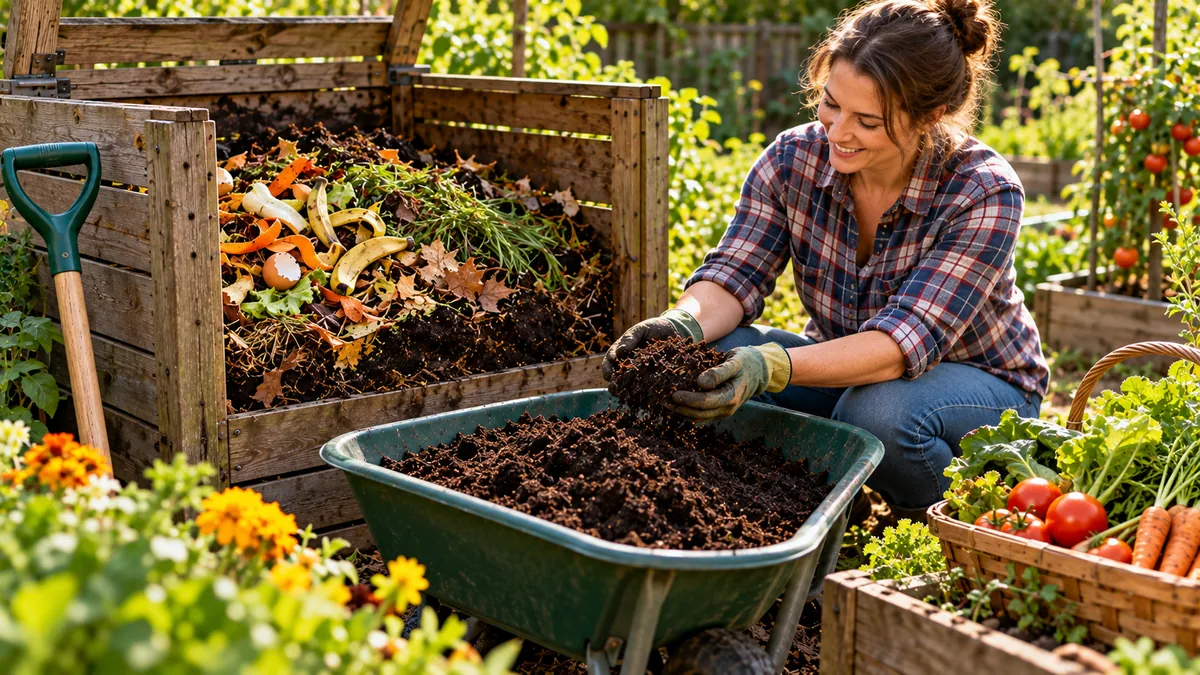
Composting turns suitable organic waste into a useful material for building and maintaining garden soil. The process relies on decomposers, including bacteria and fungi, working in conditions that provide food, moisture, and oxygen. A gardener does not need expensive equipment or a precise laboratory formula to begin. A simple pile or bin, a reliable supply of greens and browns, and a little observation are enough to start learning how compost behaves.
Remember the essentials
Use appropriate materials. Fruit and vegetable scraps, coffee grounds, leaves, untreated grass clippings, and plain untreated cardboard are common ingredients. Keep meat, dairy, grease, pet waste, chemically treated wood, plastics, and potentially contaminated plant material out of an ordinary backyard pile. Specialized facilities may accept different materials, but their rules should not be assumed to apply at home.
Balance greens and browns. Fresh, wet materials supply nitrogen and moisture, while dry leaves, straw, and shredded cardboard add carbon and help preserve air spaces. Mix ingredients rather than relying on thick layers that can mat or remain dry. Keep the pile damp like a wrung-out sponge. Add water gradually if it is dry; add dry browns and improve airflow if it is soggy or smells rotten.
Provide oxygen and allow time. Turning can help a hot pile or correct compaction, but constant turning is not necessary for every method. Cold composting takes longer and may not reach temperatures that reduce weed seeds or pathogens. Hot composting can speed the process when managed carefully, yet heat in the center does not prove every part has been treated. Let the material cure until it is stable, earthy-smelling, and mostly uniform before using it.
Start with a manageable amount
Beginners often do best with a small, straightforward system. Choose a place with reasonable drainage and enough room to add material and remove compost. Save dry leaves or shredded cardboard nearby so you can cover food scraps and correct excess moisture. Start with ingredients you can identify and manage, and avoid adding every possible waste stream immediately. A reliable routine is more useful than a complicated setup that becomes difficult to maintain.
Do not be discouraged if the first pile is slow, cool, or uneven. A pile may need more moisture, a better mix of ingredients, smaller particles, or simply more time. If it smells bad, check for excess water and limited airflow. If it remains dry, add water and mix. Make one or two adjustments and observe the response. Composting improves as you learn how your climate, ingredients, and equipment affect the process.
Use finished compost thoughtfully
Finished compost can improve soil structure, contribute organic matter, support soil organisms, and release some nutrients gradually. It can be mixed into vegetable and flower beds, applied as a thin top-dressing around established plants, and used in suitable amounts when preparing raised beds. Screened compost can be useful for lawn top-dressing. For containers, use mature compost only as part of an appropriate blend; pure compost is generally not a complete potting medium. Keep compost away from direct contact with stems and follow food-safety guidance when using it around edible crops.
Compost complements rather than automatically replaces fertilizer. Its nutrient content varies, and too much compost can create imbalances or add excess salts and phosphorus. A soil test can help determine what the garden actually needs. The goal is to improve soil over time, not to apply the largest possible amount.
Connect composting with the rest of the garden
Composting works especially well alongside other soil-building practices. A guide to soil improvement can help you understand texture, pH, drainage, and organic matter. A mulch guide can explain how to protect the soil surface, conserve moisture, and suppress weeds. A fertilizer guide can help distinguish soil amendments from products used to supply specific nutrients. Vegetable growing guides can show how crop needs, planting dates, and harvest routines affect the way you manage garden beds.
For LearnGardening.org, these topics can be linked internally so readers can move from composting to practical advice about improving soil, choosing mulch, using fertilizer responsibly, and growing individual vegetables. Keep links relevant to the question at hand rather than adding a long list of unrelated pages. A reader preparing a raised bed may want soil and vegetable guides; someone troubleshooting nutrient problems may benefit more from soil testing and fertilizer information.
Make composting a repeatable habit
The long-term value of composting comes from repetition. Save suitable scraps, keep browns available, protect the pile from excessive wetness or drying, and harvest compost when it is mature. Use only materials that are appropriate for the system and intended garden. Over time, you will learn how much waste your household produces, how quickly your pile changes, and how much compost your garden can use responsibly.
You do not need to master every method at once. Begin with a simple pile or bin, observe the results, and make small improvements from one batch to the next. Composting is a practical way to recycle organic materials and support healthier soil. With appropriate ingredients, moisture, oxygen, and patience, even a modest home system can become a useful part of a productive garden.
Keep learning from each batch
Each batch offers useful feedback. If the pile stays wet, store more browns and mix them in sooner. If leaves remain intact, shred them or allow more time. If you produce more scraps than the system can handle, reduce additions temporarily or add another appropriate bin rather than compressing the contents. These are ordinary adjustments, not signs of failure. As you learn the rhythm of your household and garden, you can decide whether a faster hot pile, a simple cold pile, or a small-space system best fits your needs.
Composting is most successful when it becomes an easy part of the gardening routine. Save suitable materials, protect the quality of the ingredients, maintain moisture and airflow, and use the finished compost in sensible amounts. Over time, this small cycle of recycling and soil care can reduce waste while helping the garden become more resilient.
Next Article: Introduction to Composting
