
Introduction to Composting
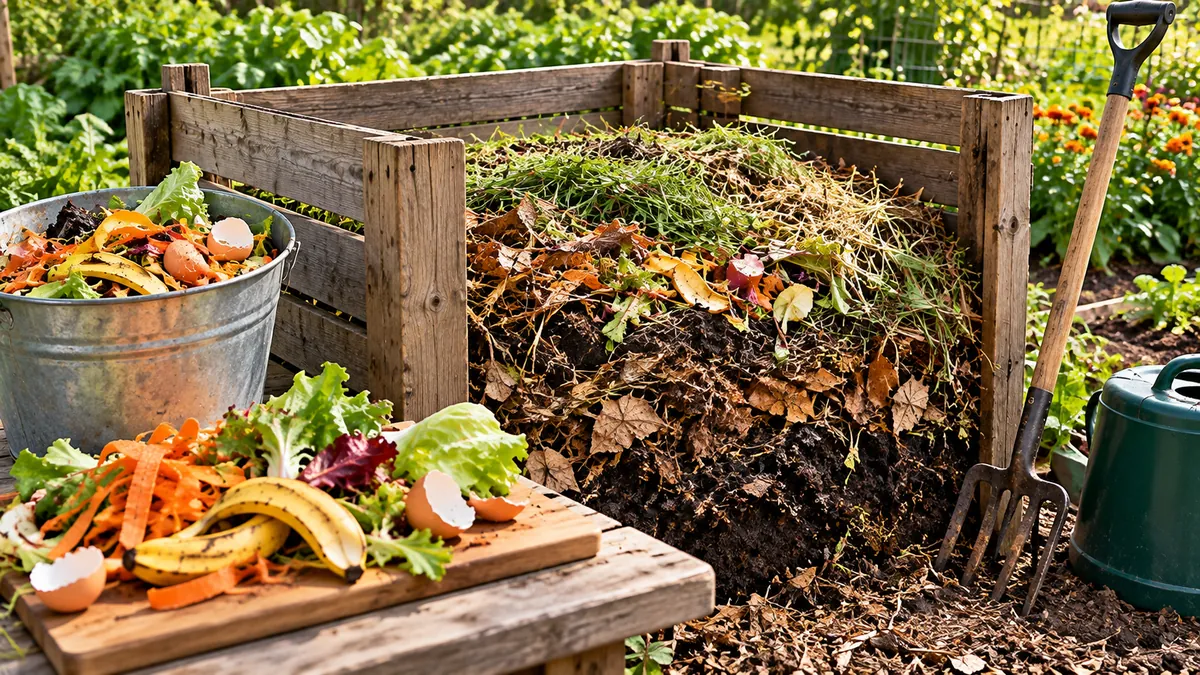
Composting is one of the most practical ways a gardener can turn everyday organic waste into something useful. Vegetable peels, fallen leaves, spent flowers, and many other natural materials do not have to go straight into a trash bag. Given the right conditions, they can decompose into compost: a dark, crumbly material that helps improve garden soil. Composting works on a small balcony or in a large backyard, and a simple system is often enough to get started.
The process is natural. Microorganisms such as bacteria and fungi consume organic material, while larger organisms—including worms, mites, and other small invertebrates—help fragment and mix it. These organisms need a suitable balance of food, moisture, and oxygen. As they break down scraps and plant residues, the materials gradually lose their original form and become more stable. A successful compost pile does not need to look tidy at every stage; it needs conditions that allow decomposition to proceed.
Why compost matters in the garden
Compost is valued primarily as a soil amendment. Mixed into garden soil, it adds organic matter that helps soil particles form stable aggregates. In sandy soil, this can improve the soil's ability to hold water and nutrients. In many clay soils, organic matter can improve structure and help water move through the root zone, although it does not instantly transform heavy clay into perfect soil. Compost also creates habitat and food for beneficial soil organisms that contribute to nutrient cycling.
Compost can benefit vegetable beds, ornamental borders, lawns, and some container-growing projects. Before planting vegetables or annual flowers, gardeners can work a modest amount into the upper soil layer. Around established plants, a thin top-dressing can add organic matter without disturbing roots. Screened, mature compost may also be included in some homemade potting blends, although pure compost is usually too dense and moisture-retentive to serve as a complete container medium by itself. A light, even layer of fine compost can be used to top-dress a lawn when the grass is actively growing and the application does not smother it.
Compost contains nutrients, including nitrogen, phosphorus, and potassium, but the amount varies with ingredients and how the material was processed. Nutrients are generally released gradually as soil organisms continue to work on the organic matter. This makes compost valuable for building soil over time, but it does not mean compost can replace every fertilizer in every situation. A crop with a specific nutrient requirement may still need a targeted fertilizer or a soil-test-guided correction.
A useful way to recycle organic waste
Home composting also changes how a household thinks about waste. Fruit and vegetable trimmings, coffee grounds, dry leaves, and untreated cardboard can become useful inputs rather than rubbish. Gardeners often have an abundant supply of leaves in autumn and grass clippings during the growing season. Saving dry leaves in bags or a covered area gives them a ready source of carbon-rich material to mix with wetter kitchen scraps and fresh green waste later.
Not every material belongs in a typical backyard compost pile. Meat, dairy, greasy foods, pet waste, chemically treated wood, plastics, and plants contaminated by persistent herbicides can cause problems or create risks. Some of these materials are accepted by specialized commercial systems, but a home pile usually lacks the controlled conditions needed to process them safely and reliably. Choosing suitable ingredients is one of the easiest ways to keep composting manageable.
What you will learn
A good composting system does not require expensive equipment or constant attention. The key is to select a method that fits the available space, amount of waste, and time you want to spend maintaining it. An open pile is inexpensive and accommodates bulky yard waste. A bin keeps material contained. A tumbler can make turning convenient, while a worm bin is useful for certain kitchen scraps in small spaces. Trench composting and bokashi fermentation offer other options, each with specific limits and follow-up needs.
This guide explains what composting is, how to choose and locate a system, which materials to add or avoid, and how to balance carbon-rich browns with nitrogen-rich greens. It also covers moisture, airflow, temperature, turning, timelines, maturity, troubleshooting, seasonal care, tools, and safe use in the garden. The goal is not to memorize complicated formulas. It is to learn how to observe a pile and make small adjustments when it is too wet, too dry, smelly, or slow to break down.
Start with a manageable system
For beginners, a simple approach is best: collect dry leaves or shredded cardboard, add fruit and vegetable scraps, mix the materials, and keep the pile damp like a wrung-out sponge. Cover fresh food scraps with browns to reduce flies and odors. If the pile becomes soggy, add more dry material and improve airflow. If it becomes dusty and inactive, add water gradually. Allow time for the material to mature before applying it to plants.
Composting is not a race. Hot piles can break down quickly when their size, ingredients, moisture, and aeration are carefully managed, while cold piles may take many months. Either approach can be useful. What matters is that the finished product is stable, earthy-smelling, and appropriate for its intended use. With a little practice, composting can become a routine part of gardening: a way to recycle nutrients, reduce waste, and steadily improve the soil that supports future plants.
A realistic first goal
For the first batch, aim to learn the process rather than produce a large quantity immediately. A small collection of vegetable scraps mixed with dry leaves is enough to practice balancing moisture and covering fresh food. Keep notes mentally or in a simple garden journal about whether the pile dries quickly, becomes too wet after rain, or attracts insects. These observations help you adapt the setup to your own conditions. If you have little yard waste, a compact bin or worm system may be more appropriate than a large open pile. If leaves are plentiful, store them for later use. Start with a volume you can manage comfortably, then expand only when you know where the finished compost will be used.
Next Article: What Is Composting?
