
What Is Composting?
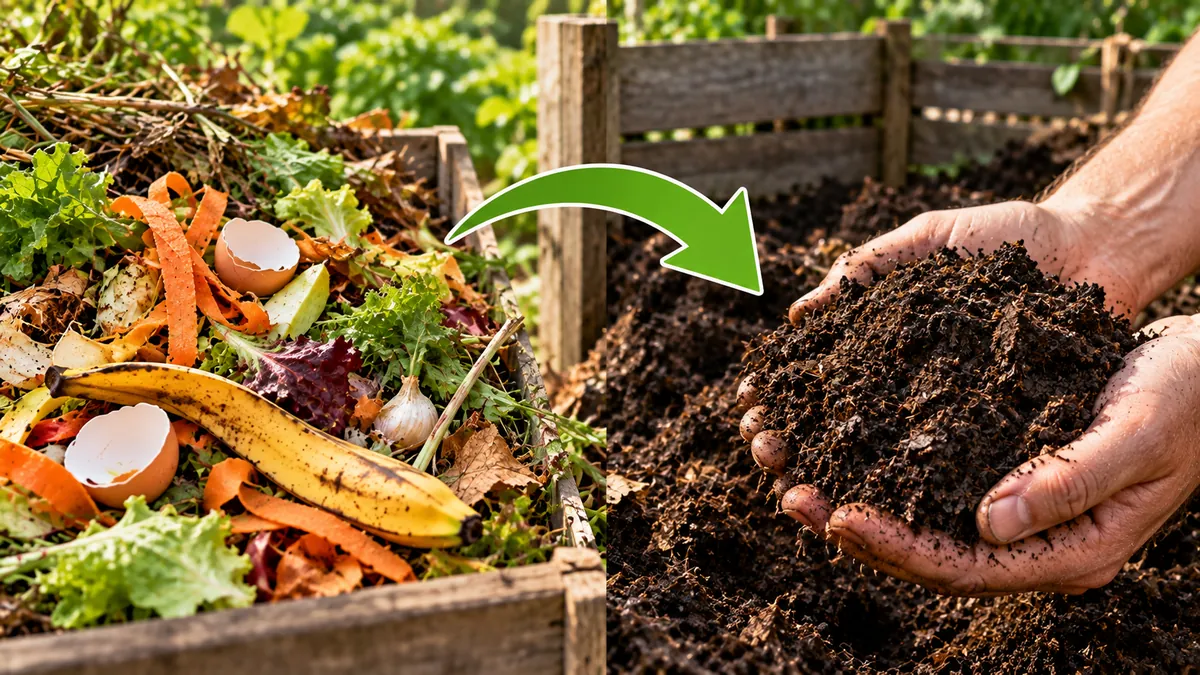
Composting is the controlled management of the natural decomposition of organic materials. Plant residues, food scraps, leaves, and other suitable materials are broken down by living organisms until they form a relatively stable soil amendment called compost. The process happens in nature wherever dead leaves and other organic matter accumulate, but a gardener can make it more useful by providing a workable mix of ingredients, moisture, and air.
The organisms doing the work
Bacteria are among the most important decomposers in an active compost pile. They use organic materials as food and release heat as they metabolize them. Different communities become active as conditions change and as the easiest-to-digest materials are consumed. Fungi help break down tougher plant materials, including some of the compounds found in leaves, stems, and woody residues. Actinomycetes, a group of filamentous bacteria, contribute to the decomposition of more resistant organic matter and may create the earthy smell associated with mature compost.
Larger organisms also play a role. Earthworms, springtails, mites, beetles, and other small animals fragment material, move it around, and consume fungi or decaying matter. Their presence depends on the composting method and temperature. A very hot pile may temporarily exclude many larger organisms from its hottest center, while they may be common in cooler outer layers and in a mature pile. These organisms are participants in a changing community, not a requirement that every pile must contain the same visible creatures.
How organic material breaks down
Decomposition starts when microorganisms colonize moist surfaces and use accessible compounds such as sugars and other easily consumed substances. Fresh materials soften, shrink, and lose their original shape. The pile may warm as microbial activity increases. Later, as readily available food becomes scarce, decomposition slows and organisms continue working on more resistant compounds. During curing, the material becomes more stable and less likely to heat rapidly when disturbed or mixed with fresh ingredients.
The speed of this process depends on particle size, material composition, temperature, moisture, oxygen, and the amount of material in the pile. Chopped leaves and small plant trimmings usually break down faster than thick branches. A dry pile may remain almost unchanged because microorganisms need water. A waterlogged pile can lose oxygen and develop unpleasant odors. A well-managed pile balances moisture and air while supplying a range of carbon- and nitrogen-containing materials.
Compost is not the same as soil
Soil is a natural mixture of mineral particles, organic matter, water, air, and living organisms. Its proportions and characteristics vary from place to place. Compost, by contrast, is a product made by decomposing organic materials. It can be added to soil to improve its physical and biological properties, but it is not automatically a complete replacement for topsoil or a universal growing medium.
Mature compost often looks dark and crumbly, with a relatively uniform texture and an earthy smell. Some recognizable bits may remain, especially woody pieces or eggshell fragments, but the original ingredients should mostly have lost their recognizable form. Compost quality varies according to the feedstocks and process. It can contain useful nutrients and organic matter, yet it may not supply every nutrient in the amount a particular crop needs. Very salty, immature, contaminated, or poorly processed compost can harm plants, which is why ingredient selection and maturity matter.
Aerobic and anaerobic decomposition
Aerobic composting takes place when oxygen is available. Most familiar backyard piles and bins are managed to support this process. Porous ingredients, appropriate moisture, and occasional turning help air move through the pile. Aerobic decomposition generally produces less offensive odors than oxygen-starved decomposition, although a healthy pile may still have a noticeable natural smell, especially after fresh materials are added.
Anaerobic decomposition occurs when oxygen is limited. It can happen in compacted, saturated compost or in a deliberately enclosed fermentation system. Anaerobic conditions can produce organic acids and gases that smell sour or unpleasant. This does not mean every anaerobic process is inherently useless; some systems deliberately use fermentation to preserve and transform food scraps. However, the resulting material may need additional time in soil or a conventional compost pile before it is suitable for planting.
Bokashi is a common example of a fermentation-based approach. Scraps are placed in an airtight container with an inoculated bran or similar product. The contents ferment rather than turning directly into finished, crumbly compost inside the bucket. The fermented material is typically buried or added to a further decomposition stage, where soil organisms complete the process. This distinction helps prevent confusion about what a system has actually produced.
Raw material versus mature compost
Raw organic material is fresh or only partly decomposed. It may include recognizable vegetable scraps, grass clippings, leaves, or stems. Such material can continue to heat, settle, release odors, or temporarily compete with plants for available nitrogen as it breaks down. Fresh scraps should not simply be piled around plant stems or mixed in large quantities into a seed-starting medium.
Mature compost is more stable. It has usually cooled after its active phase, smells earthy, and does not rapidly heat again when handled under ordinary conditions. Maturity is not judged by color alone: dark material can still be unfinished, and a pile may contain some recognizable fragments even when much of it is ready. If the compost is intended for sensitive seedlings or containers, extra care with maturity and quality is sensible.
Understanding these differences makes composting easier to manage. The aim is not merely to make organic waste disappear. It is to guide decomposition toward a stable material that can be used appropriately to support soil health and plant growth.
Why the process needs time
Decomposition is a succession of biological activity, not a single event. Easily available compounds are consumed first, while tougher stems, leaf veins, and woody fragments can persist. As the pile changes, the organisms and conditions change with it. A gardener may see the pile shrink dramatically at first and then appear to stop changing, even though slower decomposition and curing continue. This is normal. The goal is a stable product, not merely a smaller pile. Giving compost time to mature also makes it easier to separate the fine material from pieces that need another round in the active pile.
Next Article: Benefits of Composting
