
Frequently Asked Questions About Composting
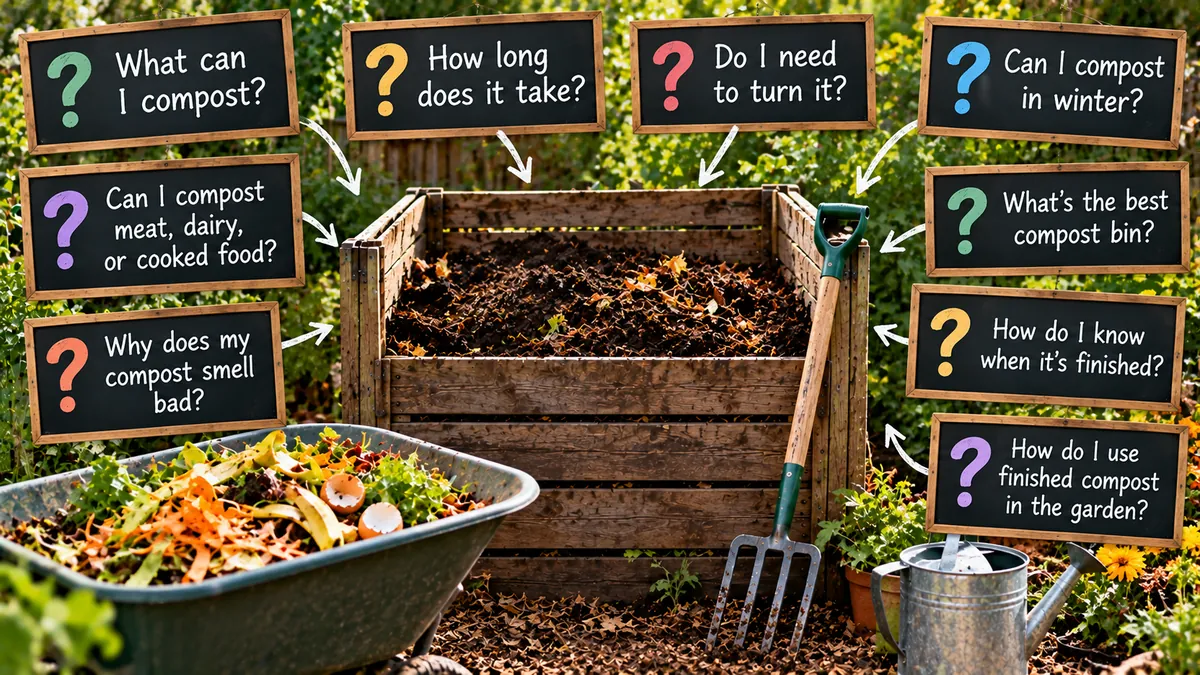
How do you compost for beginners?
Choose a simple pile or bin, collect suitable greens such as vegetable scraps and fresh grass, and mix them with browns such as dry leaves or shredded untreated cardboard. Keep the pile damp like a wrung-out sponge, provide airflow, cover food scraps with browns, and give the material time to decompose. Avoid meat, dairy, pet waste, plastics, and contaminated plant material in an ordinary backyard pile.
What is the easiest way to make compost?
For a gardener with outdoor space, a cold compost pile or stationary bin is often easiest. Add suitable plant-based waste, cover wet scraps with browns, and check moisture occasionally. It takes longer than a carefully managed hot pile, but it requires less turning and temperature monitoring. The easiest method is the one you can maintain consistently.
What is the best ratio of green to brown materials?
A commonly cited target carbon-to-nitrogen ratio is about 25:1 to 30:1 by mass, but home gardeners do not need to calculate every ingredient. As a practical starting point, use several portions of loose dry browns for each portion of wet greens, then adjust according to moisture and smell. The exact volume ratio varies because ingredients differ in density and water content.
Can you compost without a bin?
Yes. An open pile can compost effectively if it is in a suitable location and local rules allow it. Keep the pile manageable, mix greens and browns, and protect it from becoming waterlogged or excessively dry. A bin is useful for containment and appearance, but it is not essential to decomposition.
Can you compost directly on the ground?
Yes. Many open piles are built directly on reasonably drained soil. Soil contact can allow organisms to enter and gives excess moisture a place to drain. Avoid low spots where water collects and locations where runoff could reach waterways. Trench composting also places suitable organic material directly in soil, but scraps should be buried and allowed to decompose before planting directly over them.
Should compost be wet or dry?
It should be damp, not saturated or dusty. A handful should feel like a wrung-out sponge and release at most a few drops when squeezed. Add water gradually if the pile is dry. If it is wet or smells rotten, mix in dry browns and improve airflow and drainage.
How often should you turn a compost pile?
It depends on the method. Managed hot piles may be turned according to temperature, moisture, and the need to redistribute material. Cold piles can be left largely alone and turned only when compacted, wet, or smelly. Turning too often can cause moisture and heat loss, so use the condition of the pile rather than a universal schedule.
Why does compost smell bad?
A rotten or sour smell often means the pile is too wet or lacks oxygen. Mix in dry leaves or shredded cardboard, break up compacted grass, and loosen the pile. An ammonia smell can indicate excess readily available nitrogen. Also check that meat, dairy, grease, pet waste, or other unsuitable materials have not been added.
Can cooked food go in compost?
Plain plant-based cooked food may be suitable for some systems, but oily, salty, sauced, meat-containing, or dairy-containing leftovers are poor choices for a typical backyard pile because they can attract pests and create odors. Check local food-scrap collection rules; commercial facilities may accept materials that a home pile should avoid.
Can weeds be composted?
Some weeds can be composted if they have not produced viable seeds and do not have persistent roots or rhizomes. A cool pile may not kill seeds or invasive plant parts, so be cautious. If you are uncertain, follow local guidance for disposal rather than risk spreading the weed through finished compost.
How long does it take to make compost?
A well-managed hot pile may process suitable ingredients in weeks to months, while cold composting can take many months or longer. Worm bins have their own pace. Temperature, particle size, moisture, oxygen, pile size, and ingredients all affect the timeline. Compost is ready when it is stable and mature, not merely when a set number of weeks has passed.
How can you tell if compost is ready to use?
Mature compost is usually dark, crumbly, and earthy-smelling, with most original ingredients unrecognizable. It should have cooled after active decomposition and should not rapidly heat again under ordinary conditions. Screen out large pieces and return them to the pile. If you are unsure, allow more curing time.
Can you add too much compost to garden soil?
Yes. Excessive applications can create nutrient imbalances, build up phosphorus or soluble salts, and make a growing medium too dense or moisture-retentive. Apply compost according to soil conditions and plant needs. A soil test is useful when you are unsure whether more organic matter or nutrients are needed.
Is compost the same as fertilizer?
No. Compost is primarily a soil amendment that adds organic matter and supports soil structure and biological activity. It also supplies variable amounts of nutrients gradually. Fertilizer is generally used to supply specific nutrients in known or labeled amounts. Compost complements fertilizer but does not always replace it.
Can composting be done during winter?
Yes, although decomposition often slows in cold weather and may pause when material freezes. Continue adding suitable scraps if the system is accessible, cover them with browns, and avoid creating a wet, compacted pile. Save dry leaves for winter additions and reassess the material when warmer weather returns.
What should a beginner remember most?
Use appropriate ingredients, balance wet greens with dry browns, maintain moisture without waterlogging, preserve airflow, and be patient. Composting does not need to be perfect to be useful. Observe the pile and make small adjustments rather than trying to fix every variable at once.
The answers above are starting points, not substitutes for local rules or the instructions supplied with a specialized composting system. Climate, soil conditions, accepted materials, and intended use can change the best approach. When an ingredient or finished batch is questionable, choose the cautious option and seek local extension or municipal guidance.
Next Article: Final Thoughts: Start Composting at Home
