
Composting Safety and Best Practices
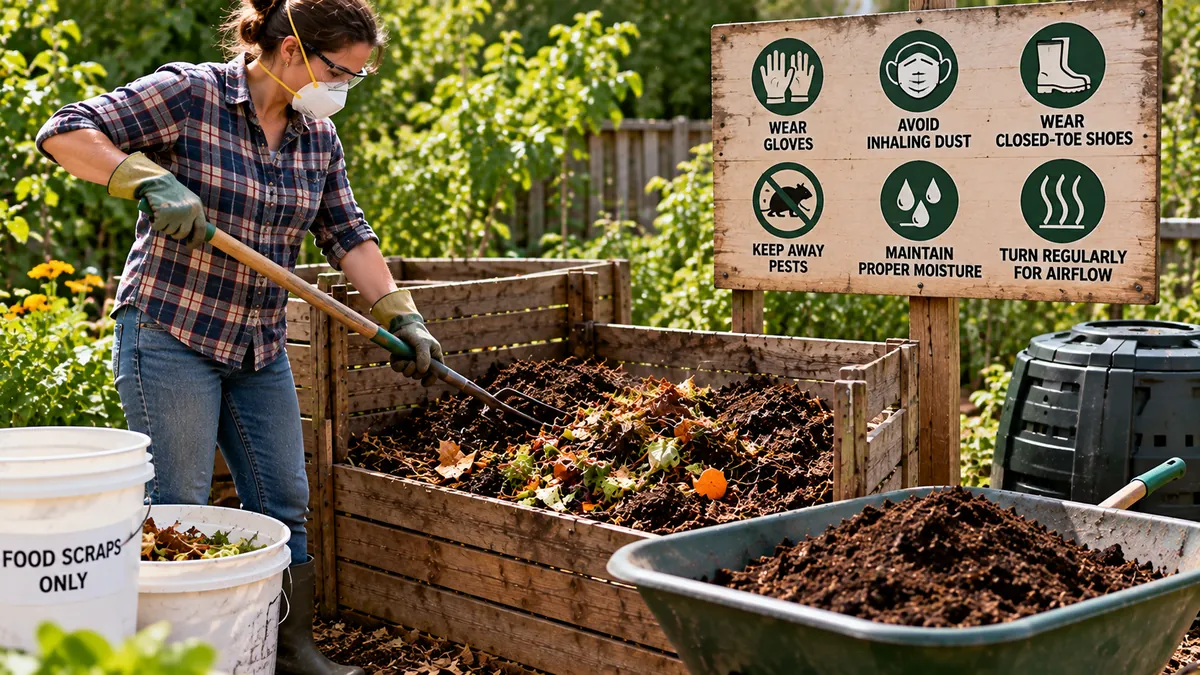
Home composting is a useful gardening practice, but the finished material should be handled with care and made from appropriate ingredients. Compost can contain microorganisms, fine dust, and residues from the materials used to make it. Good habits reduce exposure and help protect the garden, household, and surrounding environment. Safety begins with ingredient selection and continues through turning, curing, storage, and application.
Use gloves and wash your hands
Wear garden gloves when handling scraps, turning a pile, or screening compost, particularly if you have cuts or irritated skin. Wash hands with soap and water after working with compost and before eating or preparing food. Keep compost tools and collection containers reasonably clean. Avoid touching your face while handling material, and clean up spills around kitchen scrap containers so they do not attract pests.
Avoid inhaling dust and spores
Dry, mature compost can produce dust when it is turned, sifted, or poured. That dust may contain fungal spores and other biological particles. Avoid putting your face close to the material, and do not deliberately breathe the dust. If compost is very dry, lightly moisten it before handling to reduce airborne particles. Work in a ventilated area rather than in a confined space, and consider suitable respiratory protection if you must handle a particularly dusty material or are sensitive to airborne particles.
Manage animal waste and questionable materials
Do not add dog or cat feces, used cat litter, or other pet waste to compost intended for vegetable gardens or areas where people may contact it. Such materials can carry pathogens or parasites, and a home pile may not reach conditions needed to reduce them reliably. Follow local rules for disposal or use a specialized system only as directed, keeping its output separate from edible-crop areas where appropriate.
Avoid adding meat, fish, dairy, grease, chemically treated wood, plastics, and unknown residues to an ordinary backyard pile. Keep plants that may be contaminated with persistent herbicides out of the system. Composting does not reliably remove every chemical contaminant, and some herbicide residues can survive long enough to injure garden plants. If you do not know the treatment history of hay, straw, manure, or grass clippings, ask the supplier or choose a safer source.
Temperature does not guarantee sanitation
Hot composting can reduce some weed seeds and pathogens when the pile is managed so that all material receives adequate heat for an appropriate period. But home piles vary greatly. The center may become hot while the edges remain cool, and turning may be insufficient to expose every portion. A pile that merely feels warm is not necessarily sanitized. Cold compost piles may never reach high temperatures at all.
For this reason, do not use temperature as the only safety check. Start with appropriate feedstocks, manage the process carefully, and follow local guidance for compost applied to edible crops. Diseased plants deserve special caution because some pathogens can persist in ordinary composting conditions. When a serious plant disease is involved, follow local extension or waste-management recommendations rather than assuming the pile will destroy it.
Protect waterways and neighboring property
Choose a site with reasonable drainage and prevent compost runoff from entering streams, ponds, storm drains, or wells. Excess water moving through a pile can carry nutrients and organic matter. Avoid locating compost where floodwater regularly passes or where liquid drains directly toward sensitive areas. A cover can reduce excess rain, but the pile still needs ventilation. Check local regulations and any applicable property or community rules, especially for large systems or composting near boundaries.
Use finished compost appropriately
Apply mature compost rather than fresh scraps or unfinished material around plants. Keep it away from direct contact with stems and plant crowns, and avoid smothering seedlings or turf. Compost intended for containers should be mature and suitable for that use; pure compost is not usually a complete potting medium. When applying compost to food crops, follow local food-safety guidance and use material made from appropriate ingredients. Wash produce according to standard food-handling practices.
If compost has an unusual chemical smell, contains visible contaminants, or comes from an uncertain source, do not spread it simply because it looks dark. Contamination cannot always be corrected by further decomposition. Separate the material and seek appropriate guidance. A small test planting may reveal some plant-growth problems, but it cannot certify a batch as free of every contaminant.
Keep pests and odors under control
Cover fresh food scraps with dry browns, keep the bin closed when appropriate, and clean up spilled material. Avoid meat, dairy, oils, and pet waste in ordinary backyard systems. A pile that is damp and aerated should not produce a persistent rotten odor. If it does, add dry material, loosen the pile, and review its contents. Pest control is easier when the system is designed well and maintained consistently.
Build safe habits into the routine
Wear gloves, wash hands, limit dust, use suitable ingredients, and keep runoff under control. Do not assume that a hot pile destroys every pathogen or chemical residue. Give compost time to mature and apply it according to the needs of the garden. These straightforward practices make home composting safer and help ensure that the material you produce is an asset rather than a source of avoidable problems.
Be cautious with unknown sources
Compost made from materials collected from several properties or supplied in bulk may have a treatment history that is difficult to verify. Ask what went into it and whether persistent herbicides, treated wood, or contaminated waste could be present. If the source cannot be established, avoid using it around sensitive vegetables or seedlings. Keep suspect material separate while seeking advice; mixing it into a larger pile makes the source of a problem harder to identify and may spread contamination throughout the batch.
When sharing tools or compost with other gardeners, explain what materials went into the batch and whether it was hot-managed or cold-composted. Do not describe a batch as pathogen-free unless a suitable validated process supports that claim. Clear information helps people decide where the compost is appropriate and prevents assumptions that all finished-looking material has received the same treatment.
Next Article: Frequently Asked Questions About Composting
