
Composting Tools and Supplies
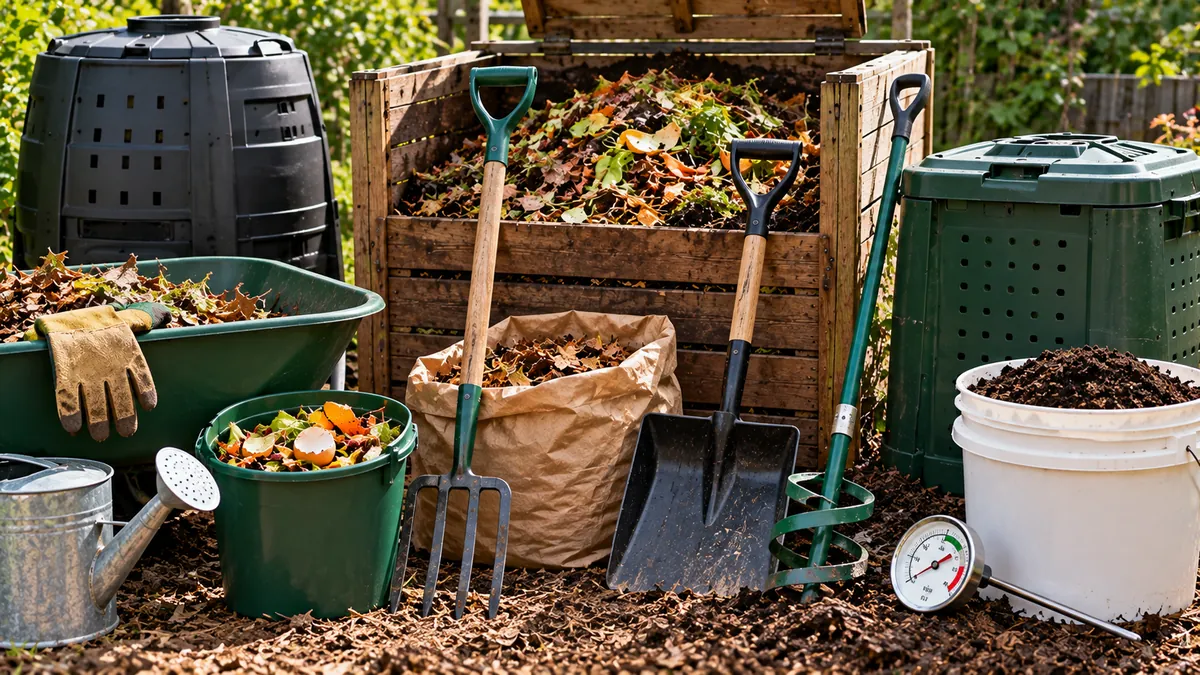
Composting does not require a long list of specialized tools. The essential needs are a place to hold or pile material, a supply of suitable ingredients, a way to manage moisture, and some means of moving or mixing the compost when necessary. Additional equipment can make the work easier, but it should be chosen according to the method and scale rather than purchased automatically.
Compost bin or designated pile area
A bin keeps ingredients contained and can make a composting area look orderly. It should allow air to enter and provide reasonable access for adding scraps and removing finished material. A stationary bin may be made from plastic, wood, wire, or other suitable materials. Before buying one, check its capacity, ventilation, lid design, and how the finished compost will be removed. Some small bins are difficult to turn or may not hold enough material for active hot composting.
An open pile is the lowest-cost option if there is enough outdoor space and local rules allow it. A defined pile area helps keep material organized, and a second bay or bin can be useful for curing finished batches while new ingredients are collected. A tumbler is another option, especially when contained mixing is attractive, but it generally has limited capacity and still requires moisture and ingredient management.
Garden fork or compost aerator
A garden fork is useful for turning, lifting, and mixing material. Choose a tool that feels manageable when loaded with wet compost. A compost aerator can loosen material inside some bins without moving the entire pile, though it may not work equally well in every design. Turning tools are especially useful for a hot compost batch or for correcting compacted, smelly material. They are optional for a cold pile that is decomposing slowly without problems.
Pruning shears, shredder, or other cutting tools
Chopping or shredding bulky material can speed decomposition by increasing surface area. Pruning shears work for small stems, while a garden shredder may be useful when processing substantial amounts of branches or coarse plant waste. Most beginners do not need to buy a shredder solely for composting. Leaves can be shredded with a mower where safe and appropriate, and cardboard can be torn by hand. Avoid placing thick branches into a small pile and expecting them to disappear quickly.
Watering can or hose
A watering can or hose helps maintain the damp, wrung-out-sponge texture compost needs. Use a gentle flow so water spreads through the material rather than running off the surface. A hose is convenient for large piles, while a watering can offers control for small bins. Watering is not required every time the pile is turned; check moisture first. If the material is already saturated, add dry browns and improve drainage instead of adding more water.
Compost thermometer
A compost thermometer is optional for ordinary cold composting but useful for managed hot piles. It can show whether the center is heating and help the gardener track changes after turning. If the goal includes reducing weed seeds or pathogens, temperature monitoring must be part of a reliable process that considers exposure throughout the pile. A single high reading does not prove all material received adequate treatment, and a thermometer cannot detect chemical contamination or guarantee maturity by itself.
Sieve and collection container
A compost screen or sieve is helpful when you want a fine, uniform product for top-dressing lawns, preparing planting beds, or blending an appropriate potting mix. Large fragments can be returned to the active pile. Screening is not essential for general garden beds, where some small woody pieces may be acceptable. A wheelbarrow, bucket, or lidded collection container makes it easier to move scraps and finished compost. For kitchen scraps, empty the collection container regularly so food does not sit long enough to create odors or attract flies.
Gloves and sensible protective supplies
Garden gloves protect hands from rough stems, soil, and splinters. Wash hands after handling compost, and avoid inhaling dust or spores when turning dry material or screening finished compost. If the material is very dry and dusty, lightly dampen it before handling. Keep tools clean enough to prevent the transfer of plant residues and contaminants between areas, particularly if you are managing diseased plants separately.
Essential versus optional equipment
For a simple backyard pile, the essentials are a designated area or suitable bin, a reliable source of browns and greens, and access to water. A fork is helpful but not always necessary for a cold pile. A thermometer, shredder, sieve, and tumbler are optional upgrades. A worm bin needs its own suitable container and bedding, while bokashi requires a bucket and the appropriate starter material. Buy equipment only after deciding which method fits your space and waste stream.
Spend for convenience, not complexity
The most expensive system is not necessarily the most effective. A large, accessible bin with good airflow may be more useful than a small gadget that is hard to empty. The ability to store dry browns, control moisture, and remove finished compost matters more than a long list of accessories. Start with basic equipment, learn how the pile behaves, and add tools only when a recurring task would genuinely be easier or safer with them.
Organize the work area
A few simple storage choices can make more difference than another specialized tool. Keep dry browns in a labeled bag or covered bay, place the scrap bucket where it is easy to empty, and leave a clear path for a wheelbarrow or collection tub. Store tools where they can dry after use and keep the area free of spilled food. If you compost in batches, designate a separate space for curing material. Good organization reduces the effort required for each addition and makes it easier to maintain a balanced pile.
For a beginner, the most useful purchase is often the one that removes a recurring obstacle. If the pile is difficult to reach, improve the path or choose a better location. If scraps are exposed, keep browns within reach. If finished compost is hard to remove, select a bin with better access before buying a thermometer or shredder. Equipment should support the composting routine rather than make it more complicated.
Next Article: Composting Safety and Best Practices
