
Composting in Small Spaces and Apartments
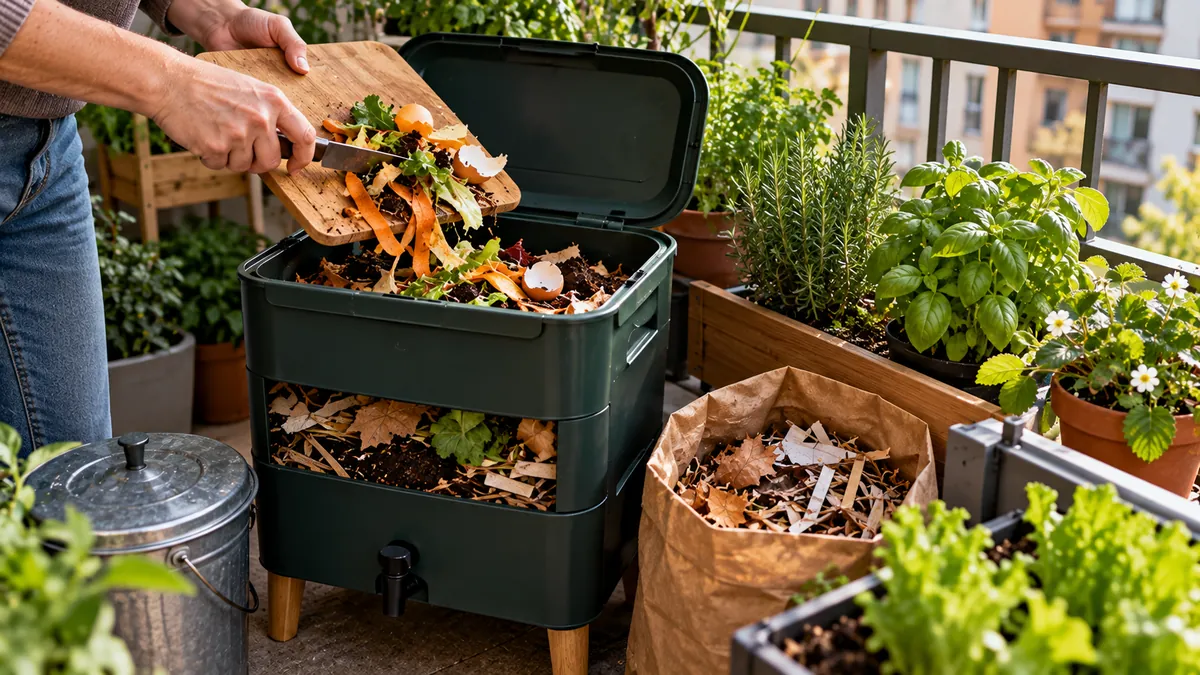
Limited outdoor space does not rule out composting. Apartment gardeners and people with small patios can use compact systems to process some kitchen scraps, share material with a community garden, or prepare scraps for further processing. The right choice depends on the amount of waste produced, available ventilation and storage, local climate, and whether there is a place to use the finished product. It is important to distinguish collecting scraps from actually composting them: a countertop container holds material temporarily but does not turn it into finished compost.
Worm bins for small-scale composting
Vermicomposting uses composting worms and microorganisms to process suitable food scraps in bedding. A worm bin can fit in a sheltered balcony, utility room, garage, or other protected area if temperatures are suitable. It is often well suited to households that generate modest amounts of vegetable and fruit scraps. The bin needs moisture, airflow, suitable bedding, and protection from extreme heat or cold. Worms are living organisms, so the system requires more attention to conditions than simply placing scraps in a sealed bucket.
Start with a suitable bin and bedding, then add small amounts of appropriate scraps. Feed at a pace the worms can manage. Overfeeding can leave food rotting before it is consumed and may attract flies or create odors. Avoid meat, dairy, grease, and pet waste. If the bin smells unpleasant, reduce feeding, remove obvious excess food if necessary, and check moisture and ventilation. A healthy worm bin should not have a persistent rotten smell.
Compact composters and collection containers
Small indoor or balcony composters vary considerably. Some are ventilated containers for holding scraps until they can be transferred outdoors; others actively process material but still need suitable moisture and airflow. Read the instructions and understand what the device produces. A sealed container that merely stores scraps is not a composting system, and a compact device cannot necessarily process all household food waste.
A countertop scrap container is useful for collection, but empty it regularly and clean it as needed. Keep it in a convenient place away from excessive heat. If scraps are stored too long, they may smell or attract fruit flies. A small amount of dry paper or other appropriate absorbent material may help manage moisture, provided it is suitable for the destination system.
Bokashi fermentation
Bokashi is an alternative that uses an airtight bucket and an inoculated bran or similar starter to ferment kitchen scraps. It is compact and can handle a range of food scraps according to the product's instructions. The contents do not become finished, crumbly compost inside the bucket. They are fermented material that needs a second stage, usually burial in soil or addition to a suitable composting process.
Before starting bokashi in an apartment, plan where the fermented material will go. A community garden, a willing gardener, or access to a suitable outdoor bed may provide a destination, but permission should be obtained before burying material on shared property. Manage any liquid according to the system's instructions and keep the container sealed as directed. If the bucket develops a strongly rotten smell rather than the expected fermentation odor, review how it was packed, drained, and maintained.
Control odors, moisture, and pests
Odor prevention starts with choosing an appropriate system and not overloading it. For a worm bin, balance food scraps with bedding and avoid adding food faster than the worms can process it. For bokashi, follow the instructions for packing and sealing. For any collection container, empty it regularly. Clean spills and do not leave food residue around the bin. Fruit flies can be discouraged by keeping scraps covered and maintaining a clean lid and rim.
Ventilation is important for aerobic systems, but airflow needs differ by method. A worm bin should exchange air without drying out the bedding. A bokashi bucket is intentionally kept airtight during fermentation. Do not apply the same rules to every system. Likewise, moisture should be managed according to the process: worm bedding is damp, while excess liquid in a collection container should not be allowed to accumulate unchecked.
Where to use or share the finished material
Apartment residents may not have garden beds, but finished vermicompost can be shared with neighbors, used in modest quantities around suitable outdoor plants, or contributed to a community garden if accepted. Check the receiving garden's rules and the material's maturity. Compost is an amendment, not a complete potting medium, and large quantities are not necessary for a few containers. Use only mature, appropriate material and avoid spreading it where contamination is possible.
If there is no practical way to process the scraps after fermentation or collection, a municipal food-scrap program may be a better option. Different programs accept different items, so check their rules before using them. It is better to send scraps to a suitable service than to maintain a system that has no workable destination.
Start small and build a routine
Choose a method that matches the amount of scraps you generate and the space you have. A small worm bin may suit a household with steady vegetable scraps; bokashi may suit someone who has a planned place to bury or further process the fermented contents. Keep the system clean, manage moisture and ventilation according to its design, and avoid overfeeding. Composting in a small space works best when the routine is simple and the destination for the finished material is clear.
Check building and community rules
Before placing a bin on a balcony or in a shared room, confirm that the building permits it and that the location can be kept clean and accessible. Protect the floor from leaks, avoid blocking ventilation or walkways, and consider neighbors who share walls or outdoor space. If you plan to take material to a community garden, ask what it accepts and how it wants scraps delivered. A small, well-managed system should fit into the space without creating odors, spills, or an unclear disposal problem.
Next Article: Composting Tools and Supplies
