
Composting Throughout the Year
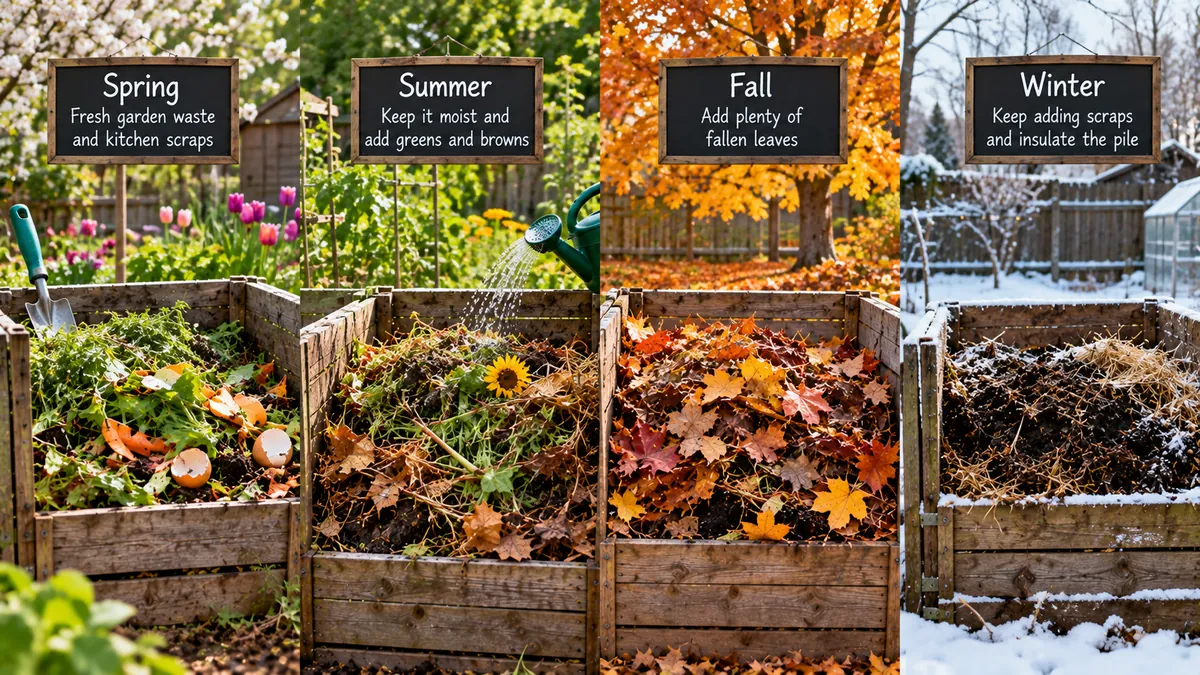
Composting continues through the seasons, but the pace and the gardener's tasks change with the weather. Heat, cold, rainfall, and the availability of leaves or fresh plant material all affect how a pile behaves. Rather than expecting identical performance every month, adjust moisture, storage, and maintenance to local conditions. A simple seasonal routine helps keep the compost system working without requiring daily attention.
Summer: manage heat and moisture loss
Warm weather can support active decomposition, but sun and wind may dry out a pile quickly. Check the moisture inside the material, not just on the surface. If it feels dry and crumbly, add water gradually as you mix. A breathable cover or partial shade can reduce evaporation, especially for a small bin. Avoid soaking the pile and then sealing it; moisture should be spread evenly while air spaces remain open.
Summer often brings plenty of green material, including grass clippings and vegetable scraps. Both can be wet and may compact when added in thick layers. Mix them with dry browns and break apart grass mats. If the pile develops a sour or rotten odor, add leaves or shredded untreated cardboard and restore airflow. In very hot weather, compost may need more frequent moisture checks, but turning is not automatically required every time you water.
Autumn: save the leaves
Fallen leaves are one of the most valuable seasonal compost ingredients. They supply carbon and can balance kitchen scraps, grass clippings, and other nitrogen-rich material. Shredded leaves mix more easily and take up less storage space. Collect more than you expect to need and store them in breathable bags, a covered bay, or another dry location where they will not become waterlogged. A reserve of leaves makes winter and spring composting easier.
Do not simply fill a bin with a thick, dry mass of leaves and expect rapid decomposition. Moisten them, mix in suitable greens, and make sure the pile has air. If you have more leaves than the compost system can handle, shred and use some as a garden mulch or store them for later batches. Avoid leaves contaminated with trash or materials that may contain persistent herbicide residues.
Winter: expect slower activity
Cold weather slows microbial activity, and small piles may remain nearly unchanged during freezing periods. This is normal. Continue adding suitable scraps if your system remains accessible, but cover fresh food waste with browns and avoid building a saturated, compacted mass. Keep dry leaves or shredded cardboard available because wet kitchen scraps can still create odor problems even when decomposition is slow.
A large, well-managed pile may retain heat in its center, while the edges cool. Do not assume that winter compost has been sanitized or that all parts have received adequate temperatures. If you cannot turn the pile safely or the material is frozen, leave it until conditions improve. Composting can continue at a slower rate, and the material can be checked again in spring.
Spring: reset and prepare for planting
Spring is a useful time to inspect bins, clear access paths, and assess the previous season's material. If the pile has settled, mix or turn it when conditions allow. Add water if it is dry, or dry browns if it is wet. Screen mature compost for planting beds and return large pieces to the active pile. Avoid using unfinished material directly around seedlings or mixing large amounts of raw organic waste into the root zone.
Garden cleanup produces a mix of plant residues. Healthy, non-diseased material can be chopped and added, while serious diseased plants and invasive weeds with viable seeds or persistent roots should be managed according to local guidance. Do not add plants that may be contaminated with persistent herbicides. Sorting material at the start protects the quality of the finished compost.
Store browns for times of abundance
The supply of greens and browns is rarely balanced throughout the year. Grass and kitchen scraps may be abundant when dry leaves are scarce, while autumn may bring a large surplus of leaves. Store browns so that they are ready when wet materials arrive. A simple reserve of shredded cardboard, straw, or dry leaves makes it much easier to correct a pile that becomes too wet or smells strongly.
Keep stored materials dry enough to handle and free of contaminants. Do not use painted or treated wood, glossy packaging, or cardboard covered with plastic tape. If dry leaves become wet in storage, they can still be useful, but a large soggy mass may need to be loosened before it can be mixed effectively.
Let local climate guide expectations
A gardener in a mild, rainy climate faces different challenges from someone in a hot, dry region or a place with long winters. The same pile may heat quickly in warm weather and slow down dramatically when temperatures fall. Container size, shade, wind exposure, and how often the pile is watered also affect the result. Use the calendar as a reminder to check conditions, not as a guarantee of when compost will be ready.
Seasonal composting is mainly about planning ahead. Save autumn leaves, prevent summer piles from drying out, accept slower winter activity, and use spring to screen mature material and prepare new batches. By matching maintenance to weather and material availability, you can keep composting practical all year and build a reliable supply of organic matter for the garden.
Seasonal checks are better than fixed dates
Climate varies from year to year, so use weather and material condition to guide work. A warm autumn may allow active decomposition to continue, while a cold spring may delay it. Check the inside of the pile for moisture, keep the supply of browns protected from rain, and avoid turning saturated material when doing so would compact the surrounding soil or make handling difficult. If the pile slows during winter, leave it in place and resume normal checks when temperatures rise.
Maintain a flexible supply
A seasonal plan works best when it includes storage as well as active composting. Keep a little more dry material than you think you need, because it is easier to correct a wet pile when browns are immediately available. If the garden produces little waste in winter, there is no need to keep adding material just to maintain activity. Let the existing batch continue, and start a new batch when suitable ingredients return.
Next Article: Composting in Small Spaces and Apartments
