
Common Composting Problems and How to Fix Them
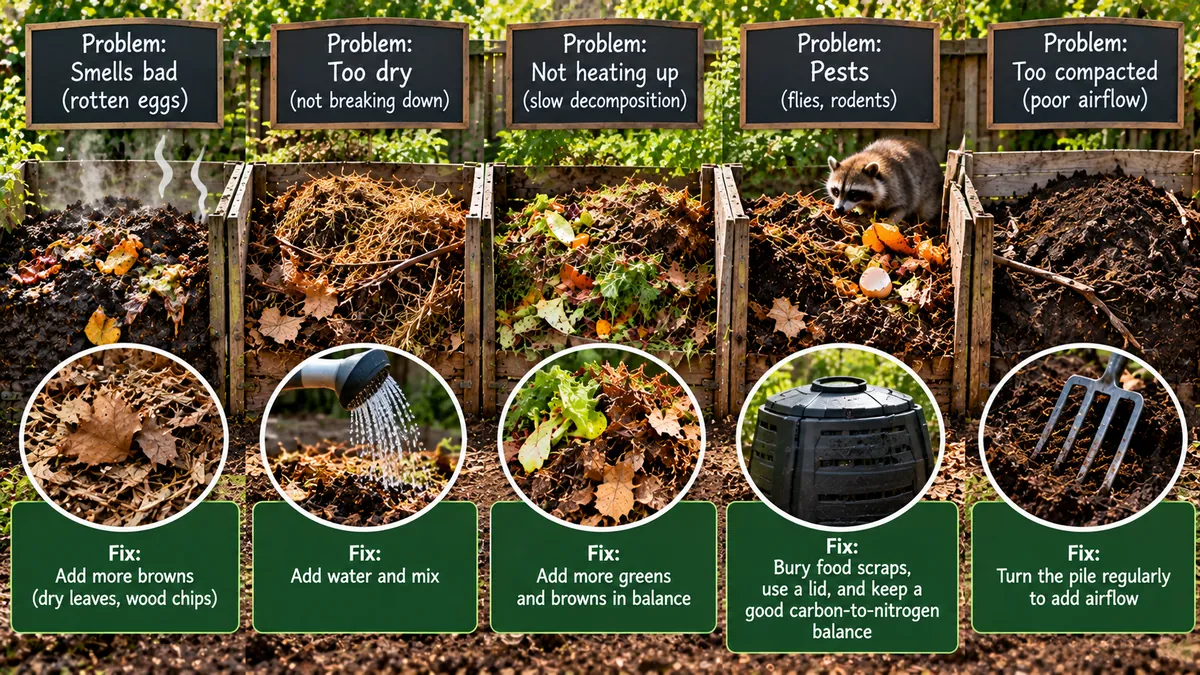
Most composting problems come down to a small number of causes: unsuitable ingredients, excess moisture, lack of oxygen, insufficient nitrogen, very large particles, or unrealistic expectations about speed. A compost pile is a changing biological system, so an occasional problem does not mean the whole project has failed. Observe the material, make a targeted correction, and give it time to respond.
The compost smells rotten
A rotten, sour, or swampy smell often indicates that the pile is too wet or compacted and has lost oxygen. Wet kitchen scraps and grass clippings can form dense mats, especially when added in thick layers. Mix in dry browns such as leaves, straw, or shredded untreated cardboard. Break apart clumps, loosen the pile, and check that rainwater can drain away. Avoid adding more wet greens until the texture improves.
A strong ammonia odor may indicate excess readily available nitrogen, though poor aeration can contribute to the problem. Add carbon-rich browns and mix them through the material. An earthy smell is normal; a persistent foul odor calls for attention to moisture, airflow, and ingredient choice. If the smell continues, check whether meat, dairy, grease, pet waste, or other unsuitable materials were added.
The pile is not breaking down
First check moisture. If the material is dry inside, add water gradually while mixing. Next, consider the ingredients: a pile made almost entirely of dry leaves, cardboard, or woody material may lack nitrogen and can take a long time to decompose. Add a modest amount of suitable green material and make sure the mix is damp. If the pile is mostly thick stems or whole leaves, shred or chop them to increase surface area.
Pile size and weather also matter. A small pile may not retain enough heat for hot composting, and decomposition slows in cold weather. Do not assume that a cool pile is failing; cold composting can work slowly. If the mixture is damp and airy but changes little, give it more time rather than repeatedly rebuilding it.
The pile is too wet
A saturated pile may drip, feel slimy, or smell bad. Add dry browns and mix them through the wet areas. Break apart matted grass and dense clumps of scraps. Check whether the pile sits in a low spot or receives excessive rain. A breathable cover can reduce direct rainfall while preserving airflow. Do not seal the pile in an airtight covering, which can worsen oxygen problems.
The pile is too dry
Dry material may look dusty, crumble apart, and remain unchanged. Add water slowly while turning or mixing so that the center becomes damp as well as the surface. A light sprinkling may not reach the interior of a large pile. Once the moisture is suitable, mix in a modest amount of greens if the pile is also carbon-heavy. Avoid flooding the pile; recheck the texture after the water has spread.
Flies gather around food scraps
Fruit flies and other insects are often attracted to exposed kitchen scraps. Bury the scraps within the pile or cover them with a generous layer of dry leaves or shredded cardboard. Keep the bin reasonably clean and avoid leaving scraps on the lid or ground nearby. A lidded collection container can help between trips to the pile, but empty it regularly. Do not add meat, dairy, grease, or heavily oily food to an ordinary backyard system.
Rodents or other pests appear
Review what you are composting and how the bin is secured. Remove meat, dairy, grease, pet waste, and other attractants. Cover fresh scraps with browns and use a secure bin designed to exclude rodents if local pest pressure is high. Check for gaps around the base and avoid leaving spilled food nearby. Simply moving the bin may not solve a problem if the contents remain attractive to pests.
Large pieces remain in finished-looking compost
Woody stems, whole leaves, and other bulky ingredients can take much longer than soft scraps. Screen the compost if you need a finer product and return the large, undecomposed pieces to the active pile. Shred them before the next round and check moisture and airflow. A few fragments are not necessarily a problem, but material intended for containers or fine top-dressing should be more uniform.
The pile becomes very hot
Heat is a normal result of active microbial decomposition in a managed hot pile, but temperature should be monitored if the pile is being run for rapid processing. Use a compost thermometer to check the center and other areas. Follow a deliberate hot-composting method and turn or adjust the pile according to its temperature pattern and moisture. If the pile becomes unusually hot or dries rapidly, redistribute it and check the conditions. Do not assume that one high reading proves all material has been adequately treated.
Weeds grow in the finished compost
Weed seedlings can appear because seeds survived a cool pile or entered the compost after it was finished. Some persistent roots may also survive incomplete processing. Review the temperature history and avoid adding mature seed heads or invasive weeds to a low-maintenance pile. Remove seedlings before they set seed, and dispose of invasive material appropriately. Hot composting can reduce some seeds when correctly managed, but it is not a guarantee that every seed is killed.
Make one correction at a time
It is tempting to add many materials, turn the pile repeatedly, and change the cover all at once. A more effective approach is to identify the strongest clue and make a measured adjustment. For a wet, smelly pile, improve aeration and add browns. For a dry, inactive pile, add water. For slow, coarse material, reduce particle size and check the balance. Reassess after several days or weeks depending on the change and the weather.
Composting rewards observation rather than constant intervention. Keep suitable ingredients available, cover fresh scraps, maintain a damp and airy texture, and allow enough time for the material to mature. Most common problems are manageable when addressed early.
Next Article: Composting Throughout the Year
