
How to Use Finished Compost in the Garden
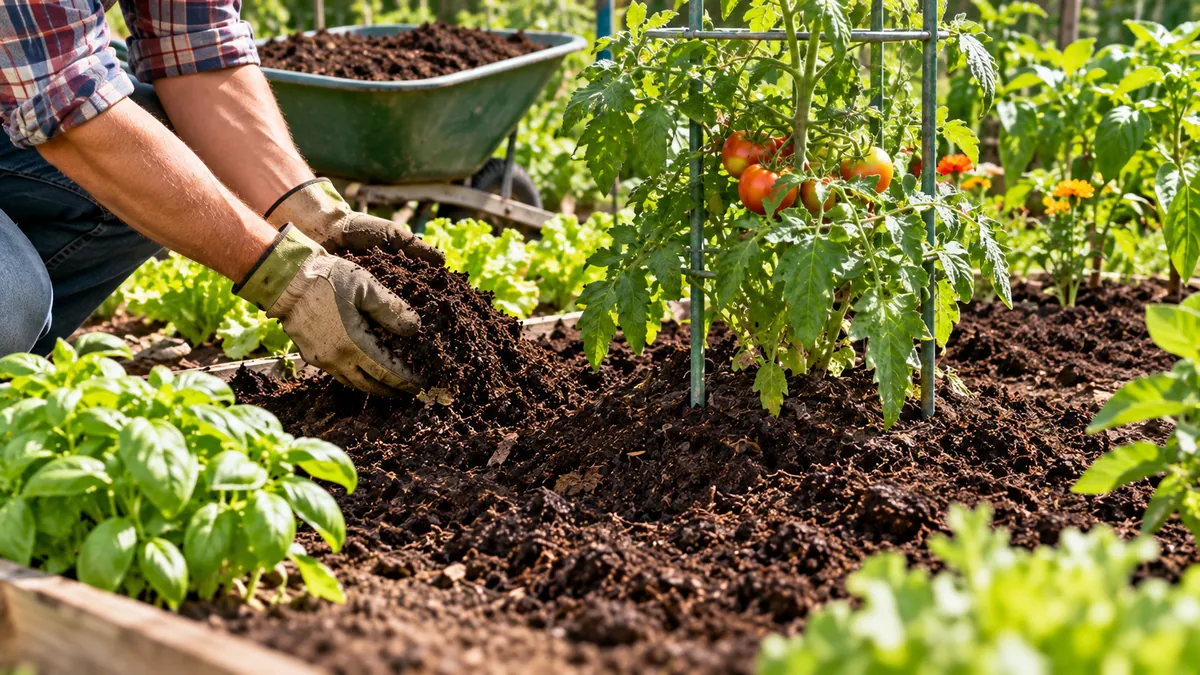
Finished compost is most useful when it is applied according to the needs of the soil and the plants. It adds organic matter, supports soil organisms, and can contribute nutrients gradually. It is not a universal substitute for topsoil, fertilizer, or a properly formulated container mix. The right amount and method depend on the compost's quality, the existing soil, and the intended use.
Prepare garden beds before planting
For vegetable beds and annual flower gardens, a modest layer of mature compost can be spread over the soil and mixed into the upper few inches before planting. Incorporating it through the root zone helps distribute organic matter, but avoid deep or repeated cultivation that damages soil structure. Do not work soil when it is wet enough to smear or compact. If the bed already contains abundant organic matter, a smaller addition—or none at all—may be appropriate.
Compost improves soil gradually. In sandy soil it can help retain moisture and nutrients; in many clay soils it can support aggregation and improve the soil's crumbly structure. It will not correct every problem, such as a high water table, severe compaction below the surface, or an unsuitable soil pH. A soil test can help identify nutrient or pH issues that compost alone may not solve.
Apply compost around established plants
Mature compost can be spread as a thin top-dressing around established vegetables, perennials, shrubs, and other garden plants. Keep it away from direct contact with stems and trunks, and avoid piling it against plant crowns. A thin layer allows rainfall and soil organisms to move some of the material into the soil over time. It can be especially convenient in perennial beds where frequent digging would disturb roots.
Compost is not exactly the same as mulch. Mulch is commonly applied as a surface layer to suppress weeds, moderate soil temperature, and reduce evaporation; many mulches are coarser and persist longer. Compost can be used as a surface amendment, but it is relatively fine and may not suppress weeds as effectively as a suitable mulch. Some gardeners apply compost first and then cover it with leaves, wood chips, or another appropriate mulch.
Vegetable and flower gardens
Vegetable crops vary in nutrient demand, so compost should be one part of a broader fertility plan. Heavy-feeding crops may need additional nutrients depending on the soil and compost quality. Root crops and seedlings may respond poorly to overly rich or immature material. Avoid assuming that a large amount of compost will always improve yield. Excessive applications can lead to nutrient imbalances, including phosphorus accumulation, or introduce too much soluble salt.
For flower beds, compost can support soil structure and provide a gradual nutrient contribution. Apply it before planting annuals or as a thin surface layer around established perennials. Do not bury plant crowns or smother low-growing groundcovers. When using compost made from uncertain feedstocks, keep it away from edible crops until the material's suitability is established.
Raised beds and containers
Compost can be part of a raised-bed soil blend, but filling a bed with pure compost is usually not ideal. Compost varies in texture and nutrient content, can settle as it continues to decompose, and may retain too much water or contain excessive salts. A raised bed generally benefits from a balanced blend of mineral soil or suitable topsoil with organic matter and other components selected for the plants being grown. The right blend depends on local materials and the bed's drainage.
Containers have even more specific requirements. Potting mixes need stable structure, adequate air space, drainage, and predictable moisture retention. Pure compost can become dense, shrink, or stay too wet for some container plants. Mature, screened compost may be blended in modest proportions with suitable potting ingredients, but it should not be treated as a complete potting mix. For seedlings, use a purpose-made seed-starting medium or a carefully formulated mix rather than coarse or unfinished compost.
Top-dressing lawns
Fine, mature compost can be applied to a lawn in a thin, even layer when the grass is actively growing. The layer should be light enough that grass blades remain visible and are not buried. Screen compost if large chunks would leave an uneven surface. Work in small amounts and use several light applications over time rather than spreading a thick blanket that can smother the turf. Lawn top-dressing is not suitable when the soil is saturated or the grass is stressed and unable to recover.
Food safety and plant contact
Use compost made from appropriate ingredients, and follow local guidance for edible crops. Home compost piles do not always reach temperatures sufficient to kill pathogens or weed seeds throughout the material. Avoid pet waste and other potentially contaminated inputs. Do not place immature compost directly against edible plant parts, and wash produce according to standard food-safety practices. Keep compost away from stems and crowns to reduce excess moisture and decay around sensitive tissues.
Apply modestly and observe
A good application rate depends on soil tests, crop requirements, and compost quality. There is no single amount that is ideal for every bed. If the soil is already rich in organic matter or phosphorus, repeated heavy applications may be counterproductive. A soil test provides a more reliable basis for deciding whether further compost or fertilizer is needed.
Spread compost evenly, avoid direct contact with plant stems, and observe how the garden responds. The goal is to build and maintain healthy soil over time, not to create a growing medium made entirely of compost. Used thoughtfully, finished compost can improve soil structure and support productive vegetable gardens, colorful flower beds, lawns, and selected container blends.
Match the application to the soil
Before applying compost repeatedly, look at the soil's condition and consider a soil test. If beds already have high organic matter or excess phosphorus, more compost may not be helpful. If soil is sandy and dries rapidly, organic matter may be particularly useful, but watering and mulch still matter. Spread compost evenly rather than concentrating it in a small pocket, and avoid disturbing established roots unnecessarily. A modest, consistent approach is easier to evaluate than a very heavy application that changes several soil properties at once.
Next Article: Common Composting Problems and How to Fix Them
