
How to Tell When Compost Is Finished
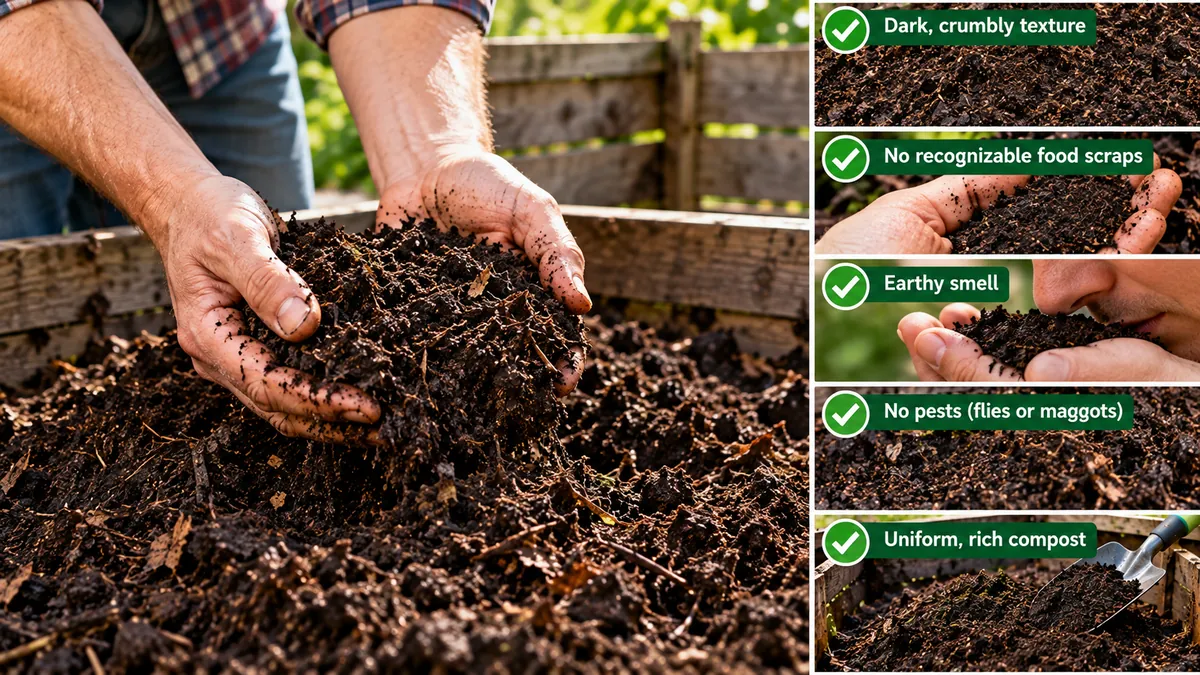
Finished compost is a relatively stable material that can be used to improve garden soil. It is usually dark, crumbly, and earthy-smelling, with most of the original ingredients no longer recognizable. These characteristics are helpful signs, but no single visual clue proves maturity. Compost may look dark while it is still active, and a few recognizable fragments can remain in a batch that is otherwise ready.
Look at texture and appearance
Mature compost often resembles a loose, crumbly soil amendment rather than a pile of separate scraps. Leaves lose their original shape, vegetable pieces disappear, and the material becomes more uniform. A few woody pieces, corn-cob fragments, or eggshells may persist because they decompose more slowly. Those pieces can be screened out and returned to the active pile rather than forcing the entire batch to wait for the slowest fragment.
Color varies with the starting materials, so do not judge maturity by darkness alone. Compost made from leaves may look different from material containing more wood or food scraps. The more useful question is whether the material has become stable, has an earthy smell, and has stopped changing rapidly. A pile that still contains obvious wet scraps or large mats of grass needs more processing.
Smell is an important clue
Mature compost usually has a pleasant earthy smell. It should not smell strongly of ammonia, rotten food, sewage, or sour fermentation. A foul odor often indicates that the pile has become too wet or compacted, or that unsuitable materials were added. If the material is not mature and smells bad, improve aeration and mix in dry browns before allowing it to continue decomposing.
Smell alone is not a guarantee of safety. Compost made from contaminated feedstocks may smell earthy and still contain unwanted chemicals or persistent herbicide residues. Good ingredient selection matters from the start. Avoid adding materials with an uncertain treatment history, and follow local guidance for compost intended for edible crops.
Check cooling and stability
During active decomposition, microorganisms can generate enough heat to warm a large pile. As readily available food is consumed, the temperature typically falls. A mature batch should have cooled and should not rapidly heat again when it is turned or gathered under ordinary conditions. If a pile heats strongly again after being disturbed, decomposition is probably still active and more curing time is advisable.
Temperature is most informative when a hot pile has been deliberately managed. A small cold pile may never become hot, yet it can eventually produce mature compost. Therefore, a cool pile is not automatically finished, and a warm pile is not automatically immature. Consider temperature together with texture, smell, ingredient history, and the way the material changes over time.
Why unfinished compost can cause problems
Raw or partly decomposed material may continue to settle, heat, or release odors after it is spread. When high-carbon material is incorporated into soil, microorganisms breaking it down can temporarily compete with plants for available nitrogen. This can affect growth, particularly if a large amount of fresh material is mixed into the root zone. Unfinished compost may also be too coarse or inconsistent for containers and seed-starting applications.
The safest response is to allow the batch to mature before using it around sensitive plants. If you are unsure, set some aside for additional curing and use only material that has clearly stabilized. Avoid placing fresh kitchen scraps directly around stems or roots as though they were finished compost.
Screening and returning large pieces
A garden sieve or compost screen can separate fine compost from larger fragments. Screening is optional, but it is useful when preparing material for top-dressing lawns, filling planting holes, or blending a suitable potting mix. The screen size depends on the intended use. A coarse screen is adequate for general garden beds, while finer applications may benefit from a finer screen.
Return the larger, unfinished pieces to the active pile. They can act as useful structure and will continue to decompose. Remove noncompostable contaminants such as plastic, synthetic string, or metal fasteners rather than returning them. If a large amount of material remains intact, consider shredding it more finely before the next batch and improving the mixture's moisture and airflow.
A simple maturity check
Take a sample from several places in the pile, including the center and edges. Check whether it is mostly uniform, damp but not slimy, and earthy-smelling. Note whether the original scraps are largely unrecognizable and whether the material has cooled. If you managed a hot pile, review its temperature history, but remember that cool edges may need additional processing. If you have concerns about plant sensitivity, a small test with a robust plant can reveal some problems, though it cannot certify the compost as safe from all contaminants.
Store finished compost properly
Keep finished compost in a covered but ventilated area so it does not become waterlogged or dry into a hard mass. Avoid sealing damp compost in an airtight container for long periods. If it dries, it can be moistened before use. Keep it separate from fresh scraps and contaminated materials so that the finished batch remains clean.
Compost is ready when it is stable enough for its intended use—not simply when a certain amount of time has passed. An earthy smell, crumbly texture, mostly unrecognizable ingredients, and cooling after active decomposition together provide a practical guide. When in doubt, curing a little longer is usually better than spreading unfinished material around plants.
Keep fresh and mature material separate
If you add scraps continuously, label or designate an older section for curing so you can assess it without confusing it with newly added waste. This is one advantage of having two bins: one can receive fresh material while the other rests. If only one bin is available, harvest the mature lower portion only when the design allows it and inspect the material carefully. Keep finished compost away from fresh scraps and from materials with uncertain contamination histories.
Next Article: How to Use Finished Compost in the Garden
