
Turning and Maintaining Compost
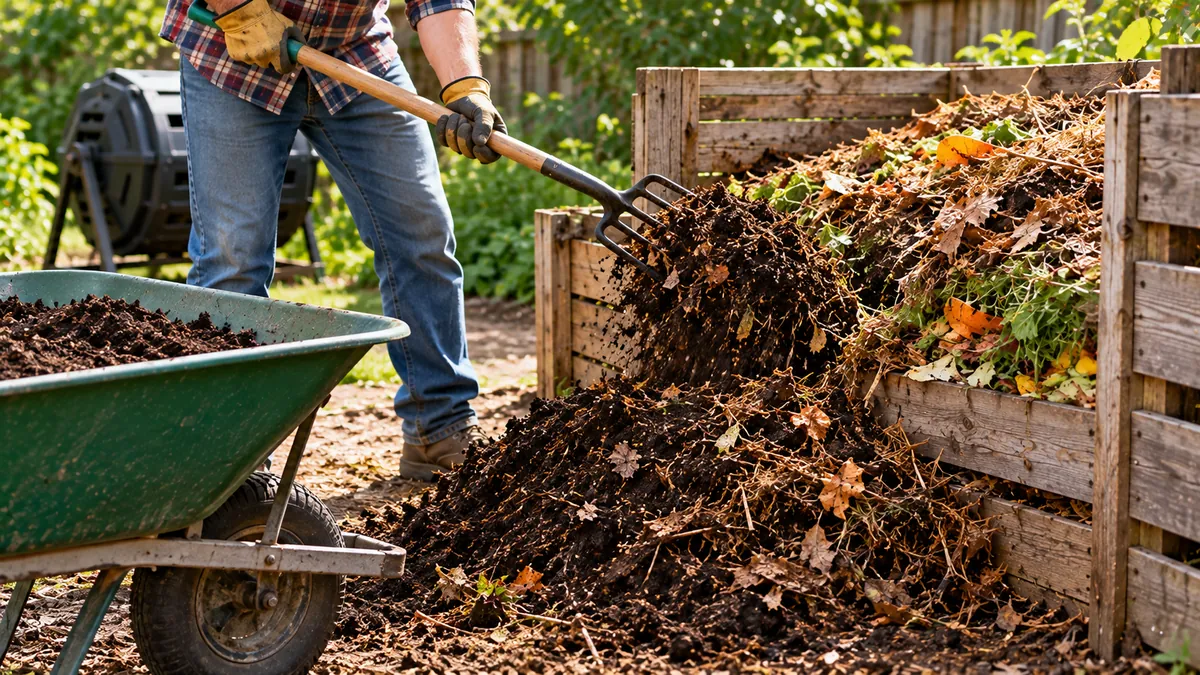
Turning compost mixes ingredients, redistributes moisture, and introduces oxygen into the pile. It can be especially useful when managing a hot compost batch, but not every system needs frequent turning. A low-maintenance cold pile may break down successfully with little intervention, while a wet, compacted pile may need immediate attention. The right maintenance schedule depends on your method and your goal.
Why turning helps
Fresh material is not always distributed evenly. The center may be warmer and more active than the edges, while the top can dry out and the bottom may become wet. Turning moves outer material toward the center and inner material toward the outside, helping to even out conditions. It also breaks apart compacted clumps and exposes more surfaces to oxygen. When done at the right time, turning can help a well-built hot pile remain active.
Turning is not a substitute for a balanced mix or adequate moisture. If a pile is dry, moving it around without adding water will not solve the problem. If it is saturated, turning may introduce some air, but the pile also needs absorbent browns and drainage. If the mixture consists largely of thick woody material, turning will not make those pieces decompose as quickly as small, shredded ingredients.
How often should you turn it?
A managed hot pile may be turned when its temperature pattern, odor, or structure indicates that fresh oxygen and redistribution would help. Some gardeners follow a regular schedule; others monitor temperature and turn after the pile has heated and begun to cool. The appropriate timing depends on pile size, ingredients, climate, and the composting approach. Turning too often can cool the pile, increase labor, and cause moisture loss, so there is no universal interval that suits every hot pile.
Cold composting requires much less attention. You can leave a pile to decompose slowly, occasionally checking moisture and adding browns over fresh scraps. Turn it if it becomes compacted or develops a bad smell, but do not feel obligated to disturb it every week. A worm bin is managed differently again: worms and bedding do much of the mixing, and excessive turning can disrupt their habitat.
When to add water or dry browns
Check moisture inside the pile. If it feels dry and crumbly, add water gradually as you mix. Use a hose with a gentle flow or a watering can, and distribute the water rather than soaking one spot. If the pile is wet, sticky, or smells rotten, mix in dry leaves, shredded cardboard, straw, or other appropriate browns. Improve airflow by breaking up mats and ensuring the bin is not packed too tightly.
Keep a reserve of dry browns near the composting area. Fresh kitchen scraps and grass clippings often arrive when the garden is producing lots of green material, and having leaves or cardboard ready makes it easy to keep the mix manageable. Store browns where they will not become waterlogged. If using cardboard, tear it into pieces and avoid adding plastic tape, glossy coatings, or contaminated packaging.
Continuous addition versus batch composting
In a continuous system, you add fresh material as it becomes available. This is convenient for households that generate kitchen scraps every day. The newest material remains less decomposed than older material, so it can be difficult to know whether everything in the bin is finished at the same time. Some bins are designed so that mature compost can be removed from the bottom while new scraps are added at the top, but the material should still be checked for maturity.
Batch composting starts with a collected quantity of ingredients, which is mixed and allowed to process as one batch. Once the pile is built, little or no fresh material is added until the batch has matured. This makes it easier to monitor a hot pile and identify when the whole batch is ready. A second bin or a separate curing area allows one batch to finish while another is being filled. The trade-off is that batch composting requires enough ingredients to start and may need more space.
Avoid unnecessary handling
Turning can be satisfying because it makes activity visible, but constant intervention is not always beneficial. Every time a pile is opened, it can lose moisture and heat. If the pile is balanced, damp, and well aerated, it may need little attention. Make maintenance decisions based on evidence: odor, moisture, temperature if monitored, compaction, and the condition of the ingredients.
Use a garden fork or compost aerator suited to the system. Work carefully around bins and tumblers, and do not lift more material than you can safely handle. Gloves and handwashing are sensible practices. If the compost is dusty, avoid inhaling dust when turning or screening it; lightly dampening dry material can reduce airborne particles.
Keep ingredients flowing
A reliable compost routine depends on having the right materials when needed. Collect kitchen scraps in a lidded container and empty it regularly. Save autumn leaves, shred cardboard, and keep a small supply of other dry browns on hand. Chop bulky garden waste when convenient and keep unsuitable materials out of the system. If a pile is full, store dry browns and pause fresh additions or use a second container rather than compressing everything into an airless mass.
Maintenance is mainly a process of observation and modest correction. Turn a hot pile when it needs oxygen or redistribution, add water when it is dry, and add browns when it is too wet or rich in greens. Allow cold piles and curing compost time to finish. The goal is not constant activity by the gardener; it is a stable environment in which decomposers can do their work.
Keep maintenance practical
Set up a routine that fits your household rather than one that demands constant attention. For example, check the pile whenever you add a fresh batch of scraps and after major weather changes. Use those moments to cover food, feel the moisture, and notice odors. A separate curing area helps prevent fresh additions from being mixed with compost that is nearly ready. If you cannot turn the pile comfortably, choose a low-maintenance approach instead of building a system that depends on heavy handling.
Next Article: How Long Does Compost Take?
