
What Should You Avoid Composting?
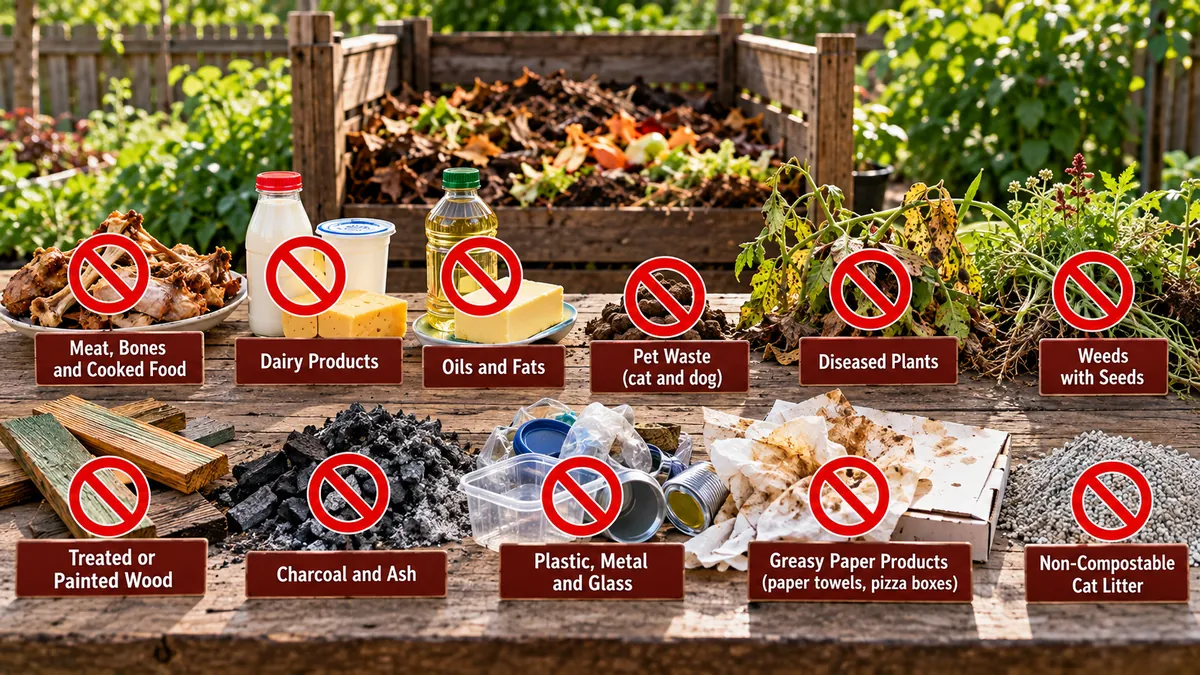
A successful compost pile depends on choosing materials that break down safely and predictably. Although commercial composting facilities may accept some items that home gardeners should avoid, an ordinary backyard pile usually cannot guarantee the sustained temperatures, processing controls, or screening needed for those materials. When in doubt, leave a questionable ingredient out and follow local waste-management guidance.
Meat, fish, dairy, grease, and oily foods
Meat, fish, bones, dairy products, grease, and oily leftovers are generally poor choices for an ordinary backyard compost pile. They can attract rodents, raccoons, flies, and other scavengers, and their decomposition may create strong odors. Bones and fatty pieces may remain for a long time. A secure, carefully managed specialized system may handle certain food wastes, but a typical open pile or basic bin is not designed for them. Do not assume burying these scraps shallowly will eliminate the problem.
Cooked food is not automatically suitable just because it is cooked. Plain plant-based leftovers may be manageable in some systems, but foods containing oil, salt, sauces, meat, or dairy are better kept out of a conventional backyard pile. If a municipality offers a food-scrap collection service, check its accepted-material list; commercial facilities may operate under different conditions.
Pet waste and cat litter
Dog and cat feces can contain pathogens or parasites that may survive in a home compost pile. Cat litter may also contain clay, fragrances, synthetic materials, or other ingredients that are not appropriate for garden compost. Do not put pet waste or used litter into compost intended for vegetable gardens, herbs, or other areas where people may contact the material. Specialized pet-waste systems have their own instructions and limitations and should not be treated as equivalent to ordinary composting.
Diseased plants and invasive weeds
Diseased plant material can carry organisms that may survive if the pile does not reach and maintain adequate temperatures. Some plant diseases are more persistent than others, and the gardener may not know exactly which pathogen is present. If a plant has a serious disease, dispose of it according to local recommendations rather than adding it to a cool or unmanaged pile. Even a hot pile may have cooler edges, so temperature history and thorough mixing matter.
Weeds with mature seeds and invasive plants with persistent roots, rhizomes, or other vegetative structures can spread when unfinished material is returned to the garden. A low-maintenance pile may not get hot enough to kill seeds. If you are unsure whether a weed will survive, do not put it in a pile intended for use around garden beds. Local guidance may identify appropriate disposal methods for invasive plants.
Persistent herbicides and contaminated yard waste
Some herbicides can persist in plant material, hay, straw, manure, or grass clippings long enough to injure sensitive garden plants after the material has been composted. This is particularly concerning with certain persistent herbicides used on lawns, pastures, or broadleaf weeds. If you do not know how a material was treated, do not assume composting will neutralize it. Ask the supplier about herbicide history and follow product-label and local guidance.
A simple bioassay can sometimes help assess a suspect compost or mulch: grow a sensitive test plant in a small sample and compare it with a clean control. Distorted growth may indicate a problem, but such a test is not a substitute for knowing the source of the material. When contamination is plausible, prevention is better than trying to fix the pile later.
Treated wood, plastics, and synthetic materials
Do not compost painted, stained, pressure-treated, or chemically treated wood. These materials may contain substances that are not appropriate for soil. Plastics, synthetic fibers, metal fasteners, and ordinary packaging do not belong in a typical compost pile because they will not break down into useful compost and may fragment into unwanted pieces. Remove plastic produce stickers, twist ties, tape, and other contaminants from kitchen scraps when practical.
Packaging labeled “compostable” requires a closer look. Some products are designed for industrial composting, where controlled temperatures and processing conditions differ from a backyard system. A label alone does not guarantee that the item will decompose in a home bin. Check the product's certification and the composting system's acceptance rules; if the packaging is not clearly suitable, keep it out.
Ash and other potentially contaminated materials
Avoid coal ash and ash from unknown sources. They may contain concentrated contaminants or have chemical properties unsuitable for the garden. Even clean wood ash is alkaline and can raise soil pH, so it should not be added casually or in large quantities. Follow local soil-testing guidance before using ash. Do not add dust, sweepings, or residues that may contain paint chips, household chemicals, pesticides, or other pollutants.
Large quantities of oils, cleaning products, treated sawdust, and unknown industrial or workshop residues are not compost ingredients. Composting is not a method for making hazardous materials safe. Keep chemical containers and residues out of the pile and dispose of them according to their labels and local rules.
Specialized facilities are different
Some materials excluded from home composting can be accepted by commercial or municipal facilities. Those operations may control temperature, oxygen, moisture, processing time, and screening, and they may have permits or testing requirements. Never assume that because an item is accepted in a city food-waste program it can also be put into a backyard bin. Follow the specific rules for the system receiving the material.
When uncertain, choose the safer option
A short list of reliable ingredients is enough for good compost: fruit and vegetable scraps, leaves, untreated grass clippings, coffee grounds, and plain untreated paper or cardboard. Cover wet scraps with browns and maintain airflow to discourage pests and odors. Keep suspicious plants and unknown materials separate. The purpose of composting is to produce a helpful soil amendment, so protecting its quality is more important than diverting every scrap from the trash.
A useful habit is to keep a short accepted-material list near the kitchen scrap container. Household members can then separate compostable plant scraps from packaging and unsuitable leftovers without having to make a new decision each time. If a municipal collection service is available, keep its accepted list separate from the rules for the home pile, since the two systems may differ.
Next Article: Getting the Carbon-to-Nitrogen Balance Right
