
Understanding Green and Brown Compost Materials
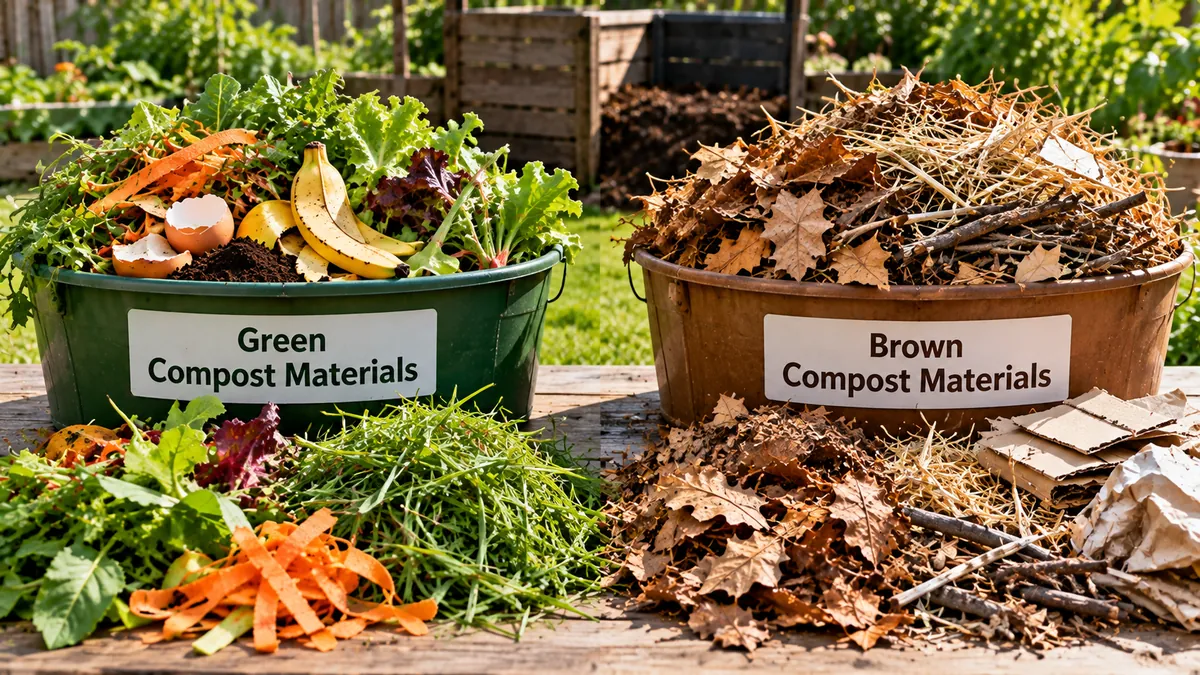
Successful composting depends on more than collecting things that once grew. The mix must provide the organisms in the pile with the nutrients, moisture, and air they need. Gardeners often describe ingredients as “greens” and “browns.” Greens are generally wetter materials that contain relatively more nitrogen, while browns are usually drier materials that contain relatively more carbon. Both categories are important, and neither is useful in unlimited quantities on its own.
What greens contribute
Greens include fresh vegetable trimmings, fruit scraps, fresh grass clippings, tender green weeds without viable seeds or persistent roots, and some fresh plant residues. These materials tend to contain more water and nitrogen than dry leaves or paper. Nitrogen is needed to build proteins and other compounds in microbial cells, so a pile with an appropriate supply of nitrogen can process carbon-rich material more effectively. Greens also provide readily decomposed compounds that help microbial activity get started.
Too many greens, however, can create a dense, wet mass. Grass clippings can mat together, and a large load of kitchen scraps can compact, exclude air, and begin to smell sour or rotten. A nitrogen-rich pile may release ammonia if the available nitrogen exceeds what the decomposer community can use efficiently. Mixing greens with dry, porous browns helps absorb excess moisture and keep air spaces open.
What browns contribute
Browns include dry autumn leaves, straw, shredded untreated cardboard, plain paper, small amounts of untreated wood material, and dry stems. These materials tend to provide more carbon relative to nitrogen. Carbon supplies energy and forms part of the structure of microbial cells. Coarser browns can also create pores that allow oxygen to move through a pile. Dry leaves are particularly useful because they are abundant in many gardens, easy to store, and simple to mix with food scraps.
Browns can also be overused. A pile consisting mostly of dry leaves, straw, or cardboard may remain intact for a long time because it lacks enough available nitrogen and moisture for rapid decomposition. Thick, unshredded pieces take longer to break down. Paper and cardboard should be plain and untreated, and they should be shredded or torn so that they mix evenly rather than forming a compacted, water-resistant layer.
Color is only a shortcut
The terms green and brown describe a material's typical role in composting, not simply its visible color. Coffee grounds are brown but are usually counted as a nitrogen-rich ingredient. A dry brown-colored plant may have a different composition from fresh green grass. Some fresh plant material may be woody and carbon-rich, while a material that looks pale can still contain nutrients. Use the categories as a practical guide and pay attention to moisture, texture, and how the pile behaves.
A useful mix includes ingredients with different textures as well as different nutrient profiles. Soft food scraps break down quickly, while leaves and small stems provide structure. Shredding large pieces increases the surface area available to decomposers. At the same time, avoid pulverizing every ingredient into a wet paste, because a pile made of very fine particles can compact and restrict airflow.
Carbon-to-nitrogen balance in plain language
Microorganisms need carbon for energy and nitrogen for growth. The carbon-to-nitrogen ratio, usually shortened to C:N ratio, compares the amount of carbon with the amount of nitrogen in a material or mixture. A commonly cited starting target for active composting is around 25:1 to 30:1 by mass. Home gardeners rarely need to calculate each ingredient's exact ratio. Different materials vary, and a volume-based scoop of leaves does not weigh the same as a scoop of wet scraps.
Instead, begin with a generous supply of dry browns and add greens in manageable amounts. Mix rather than building thick, unmixed layers. The pile should be moist but not dripping, and it should have enough coarse material to stay open. If it smells strongly of ammonia or becomes slimy, add dry browns and turn or loosen it. If it remains dry and unchanged, add moisture and some nitrogen-rich material. If the mixture is wet and sour-smelling, do not add more greens until it has regained air and balance.
Moisture and oxygen still matter
Even a theoretically balanced mixture can fail if the physical conditions are poor. Microorganisms need water to function, but water filling all the pore spaces pushes out oxygen. A pile that is too dry slows down because organisms cannot move nutrients through their cells effectively. A pile that is compacted or waterlogged can shift toward anaerobic decomposition and produce unpleasant odors.
Check moisture by squeezing a handful with gloves. It should feel like a wrung-out sponge: damp, with at most a few drops released under pressure. If water streams out, add dry, absorbent browns and improve drainage or aeration. If the handful crumbles into dust, add water gradually while mixing. Turning a pile can restore air spaces and redistribute moisture, but a very dry pile will not be fixed by turning alone.
A practical mixing routine
Keep a bag or covered container of dry leaves, shredded cardboard, or straw near the composting system. Each time you add a bucket of kitchen scraps, cover or mix them with a few handfuls of browns. The exact quantity depends on how wet the scraps are and how dry the browns are; use the pile's condition as the guide. Fresh grass clippings should be mixed with leaves or other dry materials rather than added as a thick mat. Chop large vegetable scraps and plant stems when convenient, but do not let preparation become a barrier to regular composting.
The aim is not a perfect laboratory formula. It is a workable environment for decomposers. A balanced supply of greens and browns, mixed with suitable particle sizes and kept damp and aerated, will usually outperform a carefully counted recipe that ignores moisture and oxygen. Observe the pile, make modest corrections, and give the material time to transform.
When learning, avoid trying to classify every ingredient perfectly. Begin with familiar materials and adjust from what you observe. If a pile smells of ammonia, is slimy, or mats together, add dry browns and loosen it. If dry leaves remain unchanged, check moisture and add a moderate amount of greens. The pile's smell and texture are practical feedback about the whole process, even though they cannot reveal an exact carbon-to-nitrogen ratio.
Next Article: What Can You Put in a Compost Pile?
