
Where to Put a Compost Bin
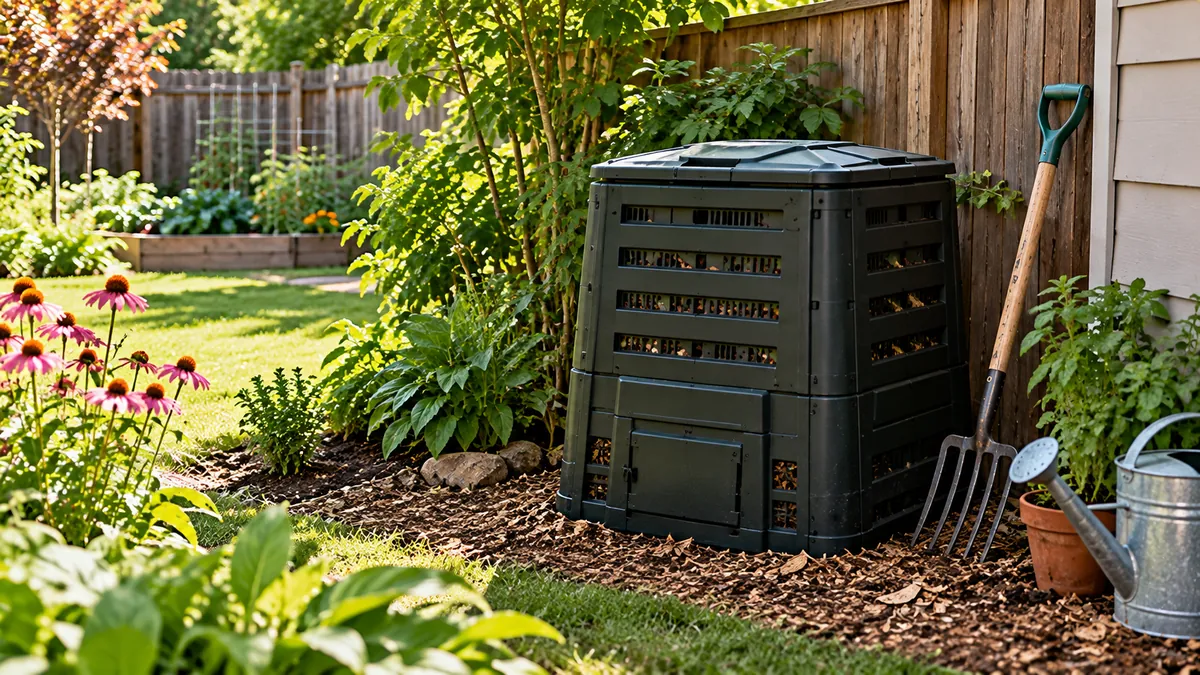
A good composting location makes the process easier to maintain and helps prevent problems with water, access, and neighbors. The ideal site is convenient enough that you will use it regularly, has reasonable drainage, and leaves room to add ingredients and remove finished compost. It does not have to be hidden at the far end of the yard. In fact, a compost system that is easy to reach is more likely to receive the steady attention that keeps it functioning well.
Choose a convenient, well-drained site
Place the bin where you can reach it from both the kitchen and the garden without carrying scraps through difficult or muddy routes. A short, practical path encourages regular use. Keep enough working space around the system to lift a lid, carry a bucket, turn material, and move finished compost into a wheelbarrow or container. If you use a tumbler, leave clearance for it to rotate. If you plan to turn an open pile, allow space to move material from one side to the other.
Drainage is important because compost should be damp, not waterlogged. Avoid low spots where rainwater collects or areas where runoff flows toward a stream, pond, storm drain, or neighboring property. A saturated pile can lose oxygen and develop unpleasant odors. A site with reasonably level ground and natural drainage is usually easier to manage. If the location is exposed to heavy rain, a loose cover or roofed system may help, but the compost still needs ventilation.
Sun, shade, and local climate
Compost can be made in sun or shade, but partial shade is often convenient, particularly in hot climates. Direct summer sun and wind can dry out a small bin quickly, requiring more frequent watering. Deep shade in a cool, wet location may keep a pile damp and slow its warming, though shade alone does not prevent decomposition. Choose the location based on the local climate and your ability to manage moisture rather than following an absolute rule that compost must be in sun or shade.
In cold climates, a site somewhat sheltered from harsh wind may help retain moisture and make the bin easier to access in winter. Do not place it where drifting snow or ice will block access if you expect to add materials year-round. In hot regions, shade can reduce water loss. In rainy areas, shelter and good drainage may matter more than sunlight. The microorganisms generate heat during active decomposition, so the pile does not rely solely on solar warmth.
Consider soil and surface conditions
A conventional pile or many bins can sit directly on soil, allowing drainage and access for soil organisms. Avoid placing the system on a surface that traps water. A hard surface can be practical in some settings, but it may change drainage and limit contact with soil; ensure that liquid cannot run into a drain or waterway. Follow the bin manufacturer's installation instructions and local rules where relevant.
Keep the area clear of persistent weeds and remove plants that could grow through or around the system. A firm, accessible path can make winter and wet-weather maintenance easier. If you plan to screen compost at the site, reserve room for a sieve, a collection container, and a place to return unfinished pieces to the active pile.
Keep the system accessible and orderly
A compost bin needs room for two different activities: adding fresh materials and handling older material. If you use continuous composting, you will often add scraps at the top or one side while the lower or older material matures. A batch system may require room for a second pile or bin so that one batch can finish while another is being filled. Think about where you will store dry leaves, shredded cardboard, straw, or other brown materials. Keeping a supply of browns nearby makes it easy to cover wet scraps and correct odors before they become persistent.
A small lidded kitchen container can collect scraps between trips to the pile, but it is only a collection container, not a substitute for the actual composting system. Empty it regularly and clean it as needed. Locate it indoors where it is convenient but not so warm that scraps sit for long periods and begin to smell.
Avoid waterway and property problems
Do not place a compost pile where leachate or stormwater can carry nutrients and organic matter into a waterway. This is especially important on steep slopes, near wells, beside drainage channels, or in areas that flood. Nutrient-rich runoff can affect water quality. If your property has a well, stream, pond, or sensitive drainage area, check local guidance for appropriate setbacks and management practices rather than relying on a universal distance.
Consider property boundaries and neighborhood conditions. A well-maintained pile made mainly from leaves, garden trimmings, and vegetable scraps should not produce a strong rotten odor. Nevertheless, the location should respect local ordinances, homeowners' association rules, rental agreements, and reasonable neighbor concerns. Some communities regulate composting near property lines or restrict particular types of waste. Check rules before building a large structure or installing a permanent system.
Manage pests through siting and habits
Pests are more often attracted by what is in the pile and how it is managed than by the mere presence of a compost bin. Bury fresh kitchen scraps within the material and cover them with dry browns. Use a secure, suitable bin if rodents are a concern, and do not add meat, dairy, grease, or pet waste to an ordinary backyard system. Avoid leaving spilled scraps or food containers around the site. If pests persist, review the ingredients and enclosure rather than simply moving the bin a few feet.
A practical location checklist
Before settling on a site, ask whether you can reach it in all seasons, whether rainwater drains away, whether the bin can be opened and worked comfortably, and whether dry browns can be stored nearby. Check that runoff will not reach waterways, and confirm that local rules permit the location and system. Consider summer heat, prevailing wind, nearby doors or windows, and the likely size of the mature pile.
The best spot is a compromise between convenience and environmental care. A shaded, accessible corner with drainage and enough working room will usually serve better than a hidden location that is difficult to reach. Once the system is in place, observe how quickly it dries after rain, whether it stays too wet, and whether you can add materials without making a mess. Small adjustments to the cover, path, or stored browns can make the site more effective over time.
Next Article: Understanding Green and Brown Compost Materials
