
Choosing the Right Composting Method
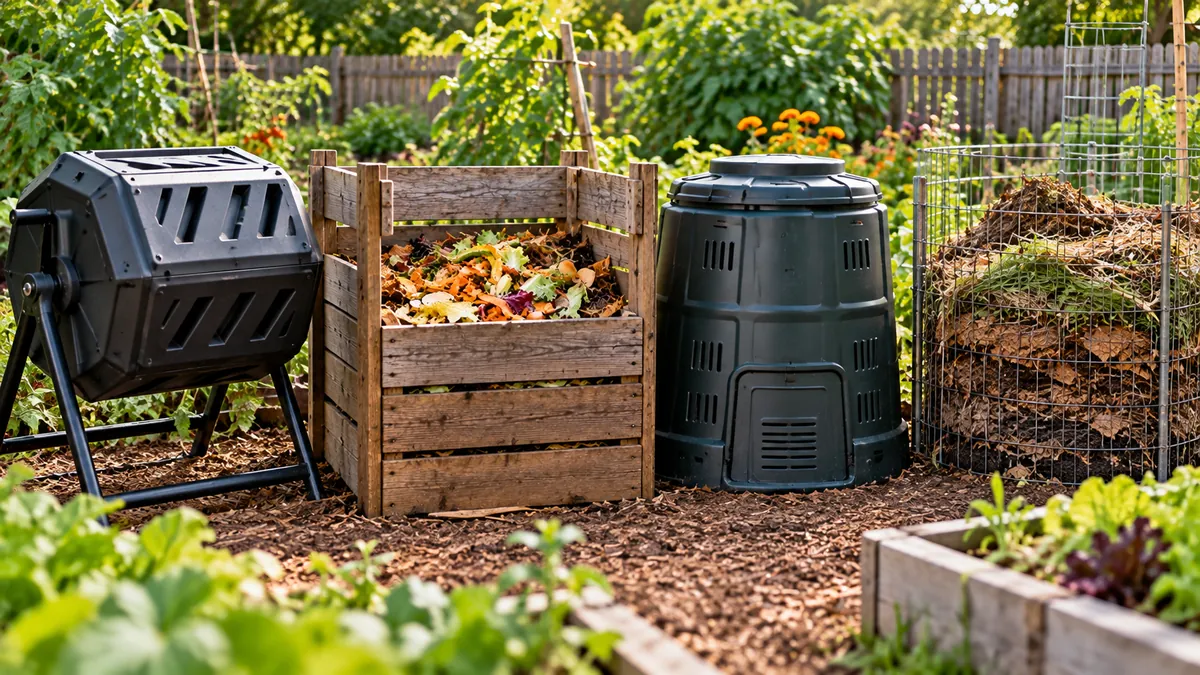
The best composting method is the one that fits the space, materials, time, and level of maintenance available. A gardener with a large yard and plenty of leaves may prefer an open pile, while someone in an apartment may need a worm bin or a fermentation system. No method is perfect for every material. Before buying equipment, consider how much organic waste you generate, whether you can store dry browns, how quickly you want a result, and where the finished material will go.
Open compost pile
An open pile is one of the least expensive options. It needs little equipment and can handle substantial volumes of leaves, grass clippings, and small plant trimmings. The pile can be built directly on reasonably drained ground, where excess moisture can move away and soil organisms can enter. Open piles are easy to expand, but they may look untidy, dry out in exposed locations, become saturated in prolonged rain, or attract pests if food scraps are left uncovered. They also require enough space to turn and harvest material conveniently.
Stationary compost bin
A stationary bin keeps materials contained and can make a composting area neater. Bins may be made of plastic, wood, wire, or other materials and vary in ventilation, capacity, and access. A well-designed bin allows air to enter and provides a way to add ingredients and remove finished compost. A small bin may be convenient but can be difficult to turn and may not hold enough material to generate sustained high temperatures. Check the design before purchase rather than assuming every enclosed container will compost effectively.
Compost tumbler
A tumbler rotates on a frame, making it easier to mix the contents without using a fork. This can be attractive for gardeners who want a contained system and prefer not to turn a pile manually. However, tumblers often have limited capacity, and the material can become too wet or compacted if the mixture is poorly balanced. They may also be difficult to fill or rotate when heavily loaded. Tumbling does not guarantee fast compost; suitable ingredients, moisture, air, and sufficient volume still matter.
Vermicomposting
Vermicomposting uses composting worms and associated microorganisms to process suitable organic scraps. Worm bins can fit in a sheltered garage, utility area, basement, or shaded outdoor location, depending on climate and design. They are useful for people who generate modest quantities of kitchen scraps and want a small-scale system. Worms need moisture, air, suitable temperatures, and food in manageable quantities. Avoid overfeeding, which can lead to odors and pests. Worm bins are not intended for every kind of waste, and worms may struggle in extreme heat or cold. The resulting vermicompost can be valuable, but it should be harvested and used according to its maturity and quality.
Trench composting
Trench composting involves burying suitable organic material in a garden bed or a trench where soil organisms can break it down. It requires little equipment and does not need a visible pile. Bury scraps deeply enough to discourage animals and avoid placing fresh material where it will interfere with roots or planting operations. The method works best when there is space to rotate the burial area and time for decomposition before planting directly over it. It is not a good way to dispose of meat, pet waste, or other unsuitable materials.
Cold and hot composting
Cold composting is a low-maintenance approach in which ingredients are added over time and allowed to break down gradually. It usually requires less turning and careful monitoring, but the process can take many months or longer. Weed seeds and pathogens may survive because the pile may never reach sufficiently high temperatures. Cold composting suits gardeners who value simplicity and are willing to be patient.
Hot composting is more actively managed. A sufficiently large pile with a suitable carbon-to-nitrogen balance, moisture, and oxygen can heat as microorganisms work. Turning and temperature monitoring may help maintain active decomposition. Properly managed heat can reduce some weed seeds and pathogens, but the entire pile must receive adequate exposure; cool edges may not be treated. Hot composting takes more effort and enough material to build a workable mass. It should not be assumed that any pile that feels warm has been sanitized.
Bokashi fermentation
Bokashi is an airtight fermentation system that commonly uses an inoculated bran or similar starter. It can accept a wider range of kitchen scraps than many ordinary backyard piles, depending on the product and directions, but it does not produce finished compost directly in the bucket. The fermented contents need further processing, often by burial in soil or incorporation into another composting stage. Bokashi is compact and can be useful where outdoor space is limited, though users need a plan for the next step and should manage liquid and odors as directed.
Compare the options before deciding
| Method | Space and cost | Effort and speed | Best fit |
|---|---|---|---|
| Open pile | Low cost; needs outdoor space | Low to moderate effort; usually slower unless managed actively | Large yards and abundant yard waste |
| Stationary bin | Moderate cost; compact footprint | Depends on access and turning; variable speed | Neat, contained backyard composting |
| Tumbler | Usually higher cost; limited capacity | Easy mixing, but moisture control can be tricky | Small to medium volumes and users who want containment |
| Worm bin | Modest space; setup cost varies | Needs regular feeding and temperature care | Small amounts of suitable kitchen scraps |
| Trench | Very low cost; uses garden soil | Low effort; timing depends on burial and planting plans | Gardeners with available beds and patience |
| Cold compost | Minimal equipment | Least maintenance; slow | Low-effort recycling of plant waste |
| Hot compost | Needs enough volume and management | More monitoring; potentially faster | Gardeners with bulk ingredients and active management |
| Bokashi | Compact; requires container and starter | Simple fermentation plus a second processing step | Small spaces with a plan for burying or finishing contents |
The most useful question is not which method is universally best, but which one you can maintain consistently. A basic bin with a reliable supply of leaves and kitchen scraps can outperform an expensive tumbler that is too small or neglected. Start with the system that suits your household, learn its moisture and airflow needs, and expand only when you understand how much compost you can realistically produce and use.
Next Article: Where to Put a Compost Bin
