
How to Grow Banana pepper: Complete Growing Guide
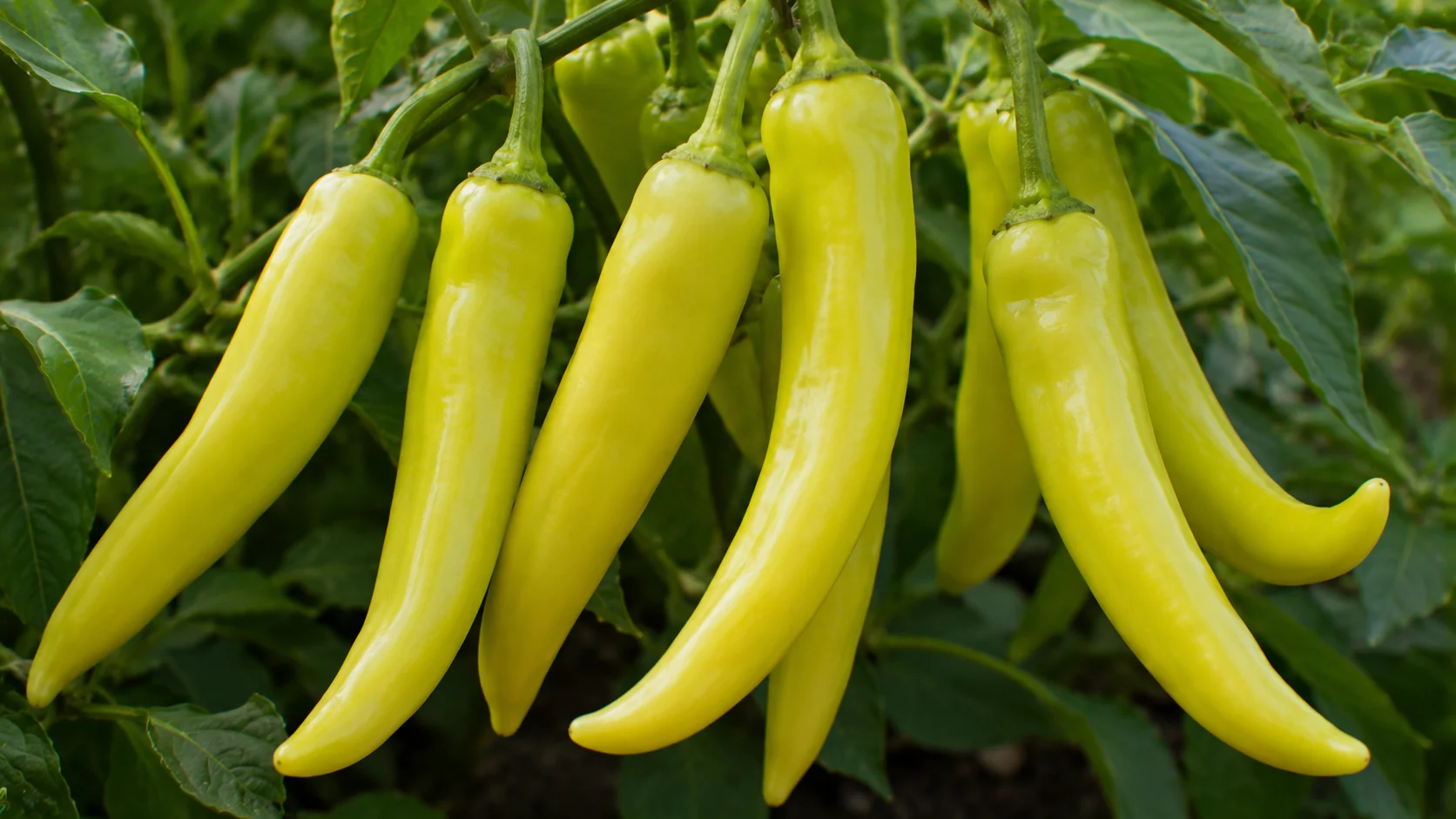
Banana pepper is a warm-season pepper. This guide covers the practical steps for growing it successfully, from planting and soil preparation through watering, maintenance, and harvest.
Quick Facts
| Growing detail | Recommendation |
|---|---|
| Crop type | warm-season pepper |
| Family | Solanaceae |
| Season | warm season after frost danger |
| Light | full sun |
| Starting method | Start indoors 8–10 weeks before outdoor planting where the season is short; transplant after nights are reliably mild. |
| Spacing | 18–24 inches between plants is a common home-garden starting point; allow more room for very vigorous plants. |
| Soil | fertile, well-drained soil with good organic matter; roughly pH 6.0–6.8 is suitable. |
| Water | steady moisture, especially during flowering and fruit development, without prolonged saturation. |
| Harvest | Pick peppers at the cultivar’s mature color and intended size. Many can also be eaten green, but flavor and heat may change as they ripen. |
About Banana pepper
Banana pepper is a warm-season pepper. The main considerations are planting at the right time, providing suitable soil and light, maintaining steady moisture, allowing enough space for healthy growth, and harvesting at the appropriate stage.
When to Plant
Timing should follow local climate, soil condition, and the crop's temperature tolerance rather than a universal calendar. Banana pepper is best planted during warm season after frost danger. Soil temperature is especially important for seed that needs warm conditions, while cool-season crops should be scheduled so the edible portion develops before severe heat.
Do not plant into soil that is saturated or badly compacted. If a transplant is used, harden it gradually before exposure to full sun and wind. For fall crops, count backward from the expected first frost and the crop's realistic maturity window rather than relying on a catalog date alone. Succession planting can improve reliability for crops that tolerate repeated sowings.
Site and Soil
Choose a site with full sun. Good drainage is important because roots require oxygen as well as water. A soil test is the most reliable way to determine whether lime or fertilizer is needed. Avoid applying large amounts of nitrogen, phosphorus, or potassium simply because the plant is considered a heavy feeder.
Prepare the root zone before planting. Remove perennial weeds and break up compacted areas without working soil when it is wet enough to smear or form hard clods. Mature compost can improve soil structure and organic matter, but compost should not automatically be treated as a complete fertilizer.
For crops producing roots, bulbs, or tubers, soil texture and depth are particularly important. For fruiting vines and plants, drainage and steady moisture are usually more important than extremely rich soil.
Starting Banana pepper
Start indoors 8–10 weeks before outdoor planting where the season is short; transplant after nights are reliably mild. Use a clean container and a suitable seed-starting medium if starting indoors. Keep the medium evenly moist, provide strong light immediately after emergence, and thin or transplant before seedlings become severely crowded.
Do not transplant crops with sensitive taproots unless the species tolerates it. For direct-sown crops, prepare a fine seedbed and keep the surface consistently moist during germination. Seed depth should follow the seed packet and the seed's size rather than a universal rule.
Planting and Spacing
18–24 inches between plants is a common home-garden starting point; allow more room for very vigorous plants. The correct spacing is the mature-plant spacing, not the distance between seedlings in a crowded tray. Crowding can reduce airflow, increase competition, and make pest and disease scouting harder. Excessive spacing can waste garden area and leave soil exposed to weeds and evaporation.
For vines, install the support before vigorous growth begins. For roots and bulbs, remove stones and compacted layers that could deform the edible portion. For tall crops, consider wind exposure and the mature height when selecting a location.
Watering
steady moisture, especially during flowering and fruit development, without prolonged saturation. Check the soil rather than following a rigid every-other-day schedule. Weather, soil texture, mulch, plant size, and container volume all change how quickly the root zone dries.
Water deeply enough to moisten the active root zone. Frequent shallow watering encourages a shallow root system and can create alternating wet and dry conditions. Drip irrigation or a soaker hose can reduce leaf wetness and deliver water where roots need it.
Mulch can reduce evaporation and moderate soil temperature. Keep mulch away from crowns and stems where persistent wetness could encourage decay. During flowering and fruit or storage-organ development, avoid large swings from severe drought to heavy irrigation.
Fertilizing
Begin with a soil test. Crop nutrient demand varies substantially, and a fixed fertilizer schedule is not appropriate for every vegetable. Excess nitrogen is a common mistake: it can create lush foliage while delaying or reducing reproductive growth in fruiting crops, and it can contribute to weak, disease-prone tissue.
Apply fertilizer according to the soil-test recommendation and crop stage. If a plant is pale, stunted, or producing poorly, inspect roots, moisture, temperature, light, and pests before assuming that fertilizer is the solution. Foliar symptoms alone are not enough to diagnose a nutrient deficiency.
Weeding, Mulching, Support, and Airflow
Keep weeds from competing with young plants while they establish. Shallow cultivation or mulch is usually safer than deep cultivation around established roots. For vines and tall plants, provide support early rather than trying to lift a tangled crop later.
Maintain airflow around foliage. Avoid routinely wetting leaves late in the day, remove severely diseased tissue when practical, and clean tools after working with plants showing suspicious disease symptoms.
Pests and Diseases
Inspect at least weekly, increasing the frequency during rapid growth, flowering, or known pest outbreaks. Check leaf undersides, growing tips, stems, flowers, and the soil line. Early detection usually gives gardeners more options than waiting for severe damage.
Typical concerns for this crop include aphids, flea beetles, pepper maggots where present, mites, and caterpillars; watch for bacterial and fungal leaf/fruit diseases and viruses. Disease diagnosis should precede treatment. An insecticide cannot cure a virus, and fertilizer cannot correct root damage caused by waterlogged soil. Use resistant cultivars when resistance is documented for the exact cultivar, improve sanitation, and use crop rotation where practical.
Rotate away from tomato, eggplant, potato, and other Solanaceae where practical.
Protect pollinators whenever flowering crops are treated for insects. Use the least disruptive effective control and follow the product label if a pesticide is actually necessary.
Harvesting
Pick peppers at the cultivar’s mature color and intended size. Many can also be eaten green, but flavor and heat may change as they ripen. Harvest with clean hands and tools and avoid unnecessary bruising or tearing. Check the crop frequently once it approaches maturity because quality can change quickly.
For crops that produce repeatedly, regular harvesting can encourage continued production. For roots, bulbs, and tubers, loosen soil carefully before lifting to reduce mechanical damage. For perennial crops, do not overharvest newly established plants.
Storage and Preservation
Fresh peppers keep best cool and dry; refrigerate for short-term storage, or freeze/dry ripe fruit for longer storage. Storage temperature and humidity should match the crop rather than the convenience of the household refrigerator. Do not seal warm, wet produce in a container where condensation can promote decay.
For long-term preservation, use a method appropriate to the crop: freezing, drying, fermentation, pickling, tested canning procedures, or cool dry storage. Foods requiring controlled acidity or processing time should be preserved using tested recipes rather than improvised methods.
Propagation and Seed Saving
Save seed only from correctly identified, healthy plants. Open-pollinated varieties generally reproduce more predictably than hybrids, while seed saved from hybrids may produce plants that differ from the parent. Cross-pollination between compatible varieties can also affect the next generation.
For crops normally propagated by cloves, tubers, crowns, rhizomes, divisions, or cuttings, use healthy planting stock. Do not propagate visibly diseased material.
Troubleshooting
| Symptom | Likely possibilities | What to check first |
|---|---|---|
| Poor emergence | cold soil, excess moisture, crusting, old seed, incorrect depth | seed quality, depth, soil temperature, surface moisture |
| Pale or weak growth | nutrient imbalance, root stress, low light, cold conditions | roots, soil moisture, light, soil test |
| Wilting | drought, root damage, heat, disease, waterlogged soil | root-zone moisture and root condition |
| Poor flowering or fruiting | temperature stress, poor pollination, excess nitrogen, plant age | weather, pollinators, fertility, plant vigor |
| Leaf spots or blight | fungal/bacterial disease, insect injury, environmental damage | symptom pattern, leaf undersides, recent weather |
| Stunting | root restriction, pests, disease, poor fertility, cold | roots and growing conditions |
Seasonal Growing Calendar
| Stage | Main tasks |
|---|---|
| Planning | Confirm botanical identity, cultivar information, maturity expectations, and local planting window. |
| Site preparation | Test soil, correct documented deficiencies, remove perennial weeds, and prepare drainage and irrigation. |
| Establishment | Sow or transplant at the correct depth and spacing; protect young plants from weeds, drought, and temperature extremes. |
| Active growth | Maintain moisture, scout weekly, manage weeds, and install support before plants become difficult to handle. |
| Flowering/production | Maintain steady moisture and monitor pests, diseases, and pollination where relevant. |
| Harvest | Use crop-specific maturity signs rather than days alone. Handle produce gently. |
| End of season | Remove diseased annual debris, clean supports, rotate crop families where practical, and record what worked. |
Frequently Asked Questions
Does the cultivar name guarantee a particular maturity date or disease resistance?
No. Use the current seed packet or breeder/supplier description for cultivar-specific claims. Weather and growing conditions also change maturity.
How often should I water Banana pepper?
Water when the active root zone begins to dry according to the crop's needs. Avoid a rigid calendar schedule and avoid keeping the soil continuously saturated.
Should I fertilize every week?
No. Fertilize according to soil-test results, crop demand, and growth stage. More fertilizer is not automatically better.
Can I grow Banana pepper in a container?
Only if the crop's mature size and root system fit the container. Use a container large enough to maintain stable moisture and provide drainage. Vining, perennial, and large-root crops may be impractical in small pots.
When should I harvest Banana pepper?
Pick peppers at the cultivar’s mature color and intended size. Many can also be eaten green, but flavor and heat may change as they ripen. Use the cultivar description for exact maturity characteristics when available.
What should I do if the plant looks unhealthy?
Do not immediately add fertilizer or pesticide. Check soil moisture, roots, light, temperature, pests, and symptom patterns first. A correct diagnosis is more valuable than a generic treatment.
Final Growing Tips
The most reliable way to grow Banana pepper is to start with correct identification, choose the right planting window, prepare the root zone, provide the appropriate spacing, maintain steady moisture, and harvest at the proper stage. Keep a simple garden record of planting dates, weather, pest or disease observations, and harvest dates. That record is often more useful than a generic calendar because it reflects the actual behavior of the crop in your garden.
